As an Amazon Associate, Zulu Parts earns from qualifying purchases. Prices and availability are accurate as of the time of purchase.
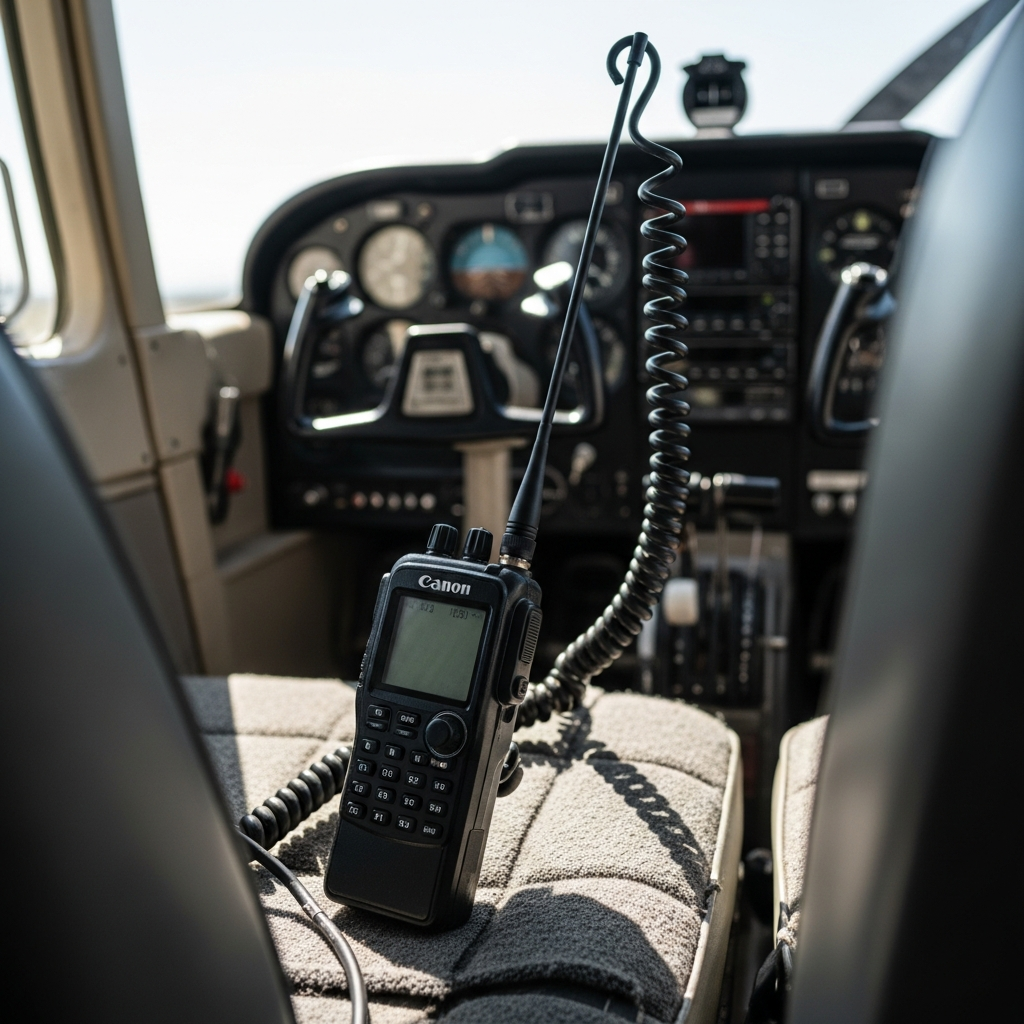
A handheld aviation radio is one of the smartest pieces of backup gear you can carry in the cockpit. Whether your panel-mounted comm goes silent on an IFR approach, your electrical system takes a hit, or you simply want a reliable way to call ground after landing somewhere unfamiliar, a quality handheld keeps you in the game. For Cessna, Piper, and Beechcraft owners flying under Part 91, it’s not a required item — but experienced pilots treat it as essential kit, right alongside a spare headset and a paper sectional.
The handheld aviation radio market is dominated by a handful of serious players, and the options below represent the best choices across a range of budgets and use cases. All of them transmit and receive on standard aviation VHF comm frequencies (118.000–136.975 MHz), and some add navigation, weather, and Bluetooth capabilities that can genuinely augment your situational awareness. Here’s what you need to know before you buy.
Our top picks at a glance:
| Product | Best For | Price |
|---|---|---|
| Yaesu FTA-750L | Advanced pilots needing extended range | Check Price → |
| Yaesu FTA-550L | Budget-conscious general aviation pilots | Check Price → |
| Icom IC-A25N | Reliable VFR and casual flying | Check Price → |
| Icom IC-A16B | Compact backup or student pilot use | Check Price → |
| Sporty’s SP-400 | Training and primary flight use | Check Price → |
Yaesu FTA-750L
The Yaesu FTA-750L sits at the top of Yaesu’s handheld lineup and earns its place there. It includes a built-in GPS receiver, VOR/ILS navigation capability, and NOAA weather receiver — a combination that makes it far more than just a backup comm radio. For a pilot who occasionally rents or borrows aircraft with minimal avionics, this radio can stand in as a meaningful nav aid. The display is clear, the build quality is solid, and battery life is respectable for a feature-rich unit.
The trade-off is price and complexity. If you only need a straightforward comm backup, you’re paying for features you may never use. But for the pilot who wants maximum capability in a single handheld, the FTA-750L is the most capable option in Yaesu’s current lineup and is hard to argue with on a long cross-country.
Check Yaesu FTA-750L handheld aviation radio price on Amazon →
Yaesu FTA-550L
The Yaesu FTA-550L steps down from the 750L by removing the built-in GPS while retaining strong transmit power, clear audio, and Yaesu’s well-regarded build quality. It still covers the full VHF aviation comm band and includes a NOAA weather receiver, making it a well-rounded backup radio at a more accessible price point. The interface is intuitive for a pilot already familiar with Yaesu products, and the Li-ion battery pack keeps the unit light and compact.
This is an excellent choice for pilots who already have a portable GPS or EFB tablet handling navigation and simply want dependable, no-fuss voice communication as a backup. You get the Yaesu reliability without funding features you’re duplicating elsewhere in the cockpit.
Check Yaesu FTA-550L handheld aviation radio price on Amazon →
Icom IC-A25N
The Icom IC-A25N is one of the most feature-packed handheld aviation radios available from any manufacturer. It offers built-in GPS, VOR navigation reception, active noise-canceling on the microphone, and Bluetooth connectivity for pairing with compatible headsets — a genuinely useful feature for pilots who prefer a wireless cockpit setup or want to use the radio hands-free. Icom’s reputation for audio clarity and receiver sensitivity is well established, and the A25N upholds it.
The Bluetooth and noise-canceling capabilities make the IC-A25N particularly appealing for pilots doing a lot of pattern work at busy fields or operating in high-noise environments. It’s on the pricier end of the handheld spectrum, but if Bluetooth integration with your headset matters to you, no other handheld on this list offers it. Just confirm your headset is Bluetooth-compatible before committing.
Check Icom IC-A25N handheld aviation radio price on Amazon →
Icom IC-A16B
The Icom IC-A16B is a more straightforward handheld that covers VHF aviation comm frequencies with solid transmit power and Icom’s characteristically clean receiver performance. It lacks GPS and Bluetooth, but that simplicity translates into ease of operation — you won’t be hunting through menus when you need to punch in a frequency fast. The build is rugged and the controls are logically laid out, which matters when you’re already managing a developing abnormal situation in the cockpit.
For pilots who want a trusted, capable comm-only backup without paying for navigation features they’ll never rely on in an emergency, the IC-A16B is a practical and well-respected choice. It’s also a popular option for student pilots and flight schools where straightforward operation matters most.
Check Icom IC-A16B handheld aviation radio price on Amazon →
Sporty’s SP-400
The Sporty’s SP-400 is a well-known alternative in the handheld aviation radio space, offered by a company with deep roots in pilot supplies and flight training. It’s designed specifically with pilots in mind — not amateur radio operators — so the frequency input, channel scanning, and overall interface are optimized for aviation use right out of the box. It includes a weather receiver and features a large, easy-to-read display.
The SP-400 is a solid choice for pilots who want something genuinely pilot-friendly and are comfortable buying from a name they already trust from the Sporty’s catalog. It may not match the raw spec sheet of the top-tier Icom or Yaesu units, but for straightforward backup comm duty it performs reliably and is worth considering alongside the Japanese-brand options.
Check Sporty’s SP-400 handheld aviation radio price on Amazon →
How to Choose
The right handheld aviation radio depends on how you fly, what’s already in your panel, and how much redundancy you want to build into a single device. All of the radios above will do the fundamental job — putting your voice on frequency when your primary comm is unavailable. The differences come down to additional capabilities and interface preferences.
- GPS and navigation: If you want a handheld that can also serve as a backup nav source, look at the Yaesu FTA-750L or Icom IC-A25N. If you already have a tablet or portable GPS, skip this feature and save money.
- Bluetooth capability: Only the Icom IC-A25N offers Bluetooth headset connectivity among these picks. Confirm headset compatibility before purchasing.
- Simplicity under pressure: Radios like the IC-A16B and FTA-550L have fewer modes and menus. For many pilots, that’s a feature — you can operate them quickly when stress is elevated.
- Battery life and type: Consider whether the radio uses a proprietary Li-ion pack or accepts AA batteries as a backup power source. AA compatibility can be a real advantage when traveling to remote strips.
- Audio quality and receiver sensitivity: All of these units perform well, but read pilot forums for real-world reports on how they handle busy frequencies and background noise in your type of aircraft.
FAQ
Do I need a license to use a handheld aviation radio?
To transmit on aviation frequencies in the United States, you need an FCC Restricted Radiotelephone Operator Permit, which is a straightforward application. Your aircraft also needs a radio station license if you’re flying internationally. For domestic VFR flying, enforcement is minimal, but the license is required and inexpensive to obtain.
Can I use a handheld aviation radio with my aircraft headset?
Most handheld aviation radios include a standard GA dual-plug adapter (or the adapter is available as an accessory), allowing you to connect a conventional aviation headset. This is strongly recommended — using a handheld with its built-in speaker and mic in a noisy cockpit is far less effective than routing it through your headset.
How much transmit power do I actually need?
Most quality handheld aviation radios transmit at 5 to 6 watts on high power, which is adequate for normal air-to-air and air-to-ground communication within reasonable range. Some units offer selectable power levels to conserve battery. For backup purposes, the high-power setting of any radio on this list is sufficient for communicating with ATC and other aircraft in typical general aviation scenarios.