Posted on

Best Pilot Flight Bags for Cross-Country Flying

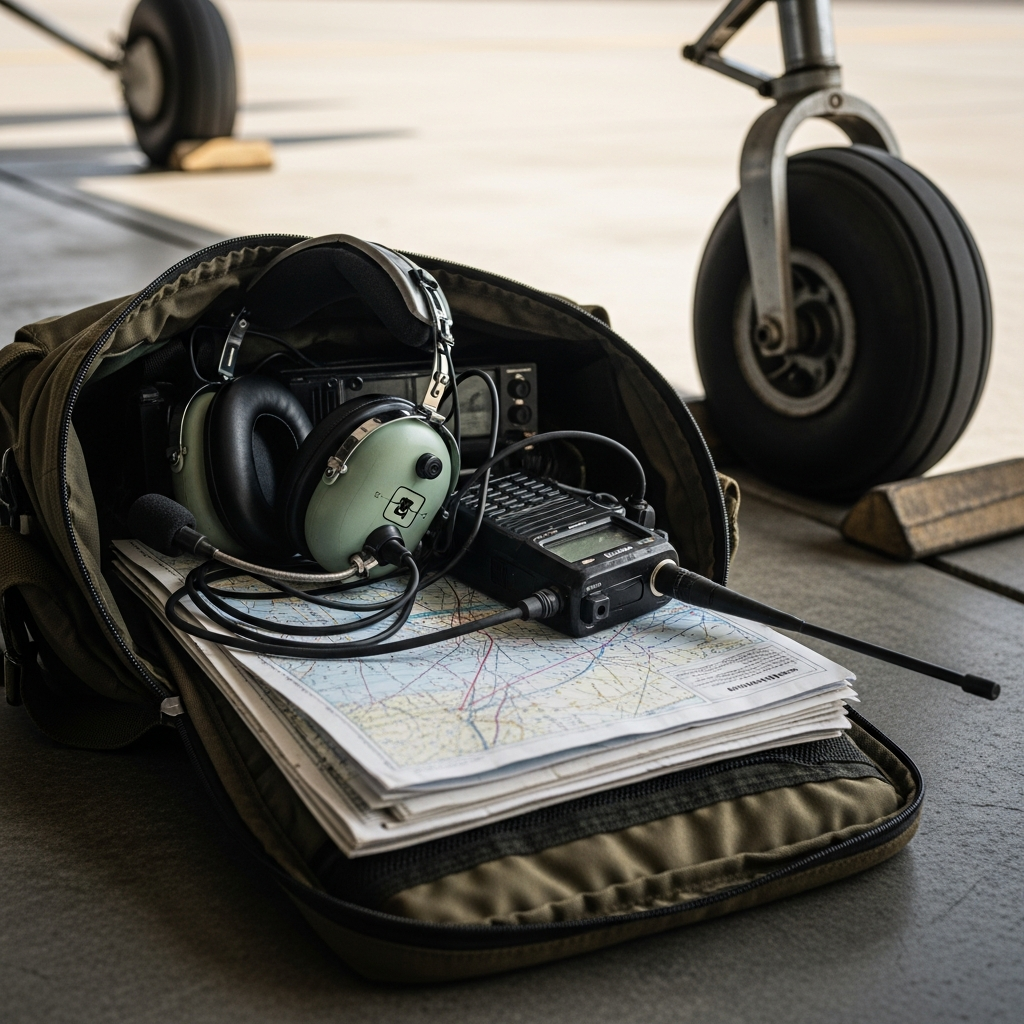
An open pilot flight bag with an aviation headset, folded charts and a handheld radio, on

As an Amazon Associate, Zulu Parts earns from qualifying purchases. Prices and availability are accurate as of the time of purchase.

A well-chosen flight bag is one of those pieces of gear that quietly makes every cross-country flight better. It keeps your charts, headset, iPad, and emergency gear organized and accessible during preflight, en route, and on the ramp — and on a long trip with multiple legs, that organization pays real dividends in reducing cockpit clutter and pilot fatigue. Whether you fly a Cessna 172, a Piper Arrow, or a Beechcraft Bonanza, the bag you carry is with you every single flight, so getting the right one matters.

Cross-country flying puts specific demands on a flight bag that local pattern work doesn’t. You need room for an EFB tablet, a quality headset, approach plates or a kneeboard, snacks, and overnight gear — all in a package that fits under a Cessna’s cramped panel or in a Piper’s baggage compartment without becoming a cockpit hazard. The picks below cover a range of sizes, organizational styles, and price points to match different flying missions and aircraft types.

Our top picks at a glance:

Product Best For Price
Sporty’s Crosswind Flight Bag Affordable everyday flight bag option Check Price →
Flight Outfitters Lift Flight Bag Lightweight organization with comfortable carry Check Price →
Brightline Bags B7 CORE Flight Bag Premium durable construction and design Check Price →
MyGoFlight Flight Bag PLC Customizable organization for various pilots Check Price →
Jeppesen Flight Bag (Large Tri-Fold) Large capacity tri-fold storage solution Check Price →

Sporty’s Crosswind Flight Bag

Sporty’s has been outfitting pilots for decades, and the Crosswind reflects that institutional knowledge. It’s a medium-sized, soft-sided bag with well-thought-out compartmentalization — dedicated slots for charts, a headset compartment, and exterior pockets that keep frequently grabbed items like sunglasses and a handheld radio within easy reach. The materials are durable without being excessively heavy, which matters when you’re already carrying a headset case and an overnight bag across a busy FBO ramp.

The Crosswind suits the private pilot or instrument student who wants a classic, no-fuss layout at a reasonable price point. It won’t win awards for modular customization, but its straightforward design means everything has a place and you’ll find it quickly on a bumpy leg in IMC. A solid first “real” flight bag for pilots moving beyond a backpack.

Check Sporty’s Crosswind flight bag pilot price on Amazon →

Flight Outfitters Lift Flight Bag

The Flight Outfitters Lift has earned a loyal following among general aviation pilots who want a thoughtfully modern bag without paying professional-grade prices. Its standout feature is the dedicated padded tablet sleeve that securely holds an iPad mini through a full-size iPad, making it a natural fit for ForeFlight-equipped pilots. The main compartment is deep enough for a David Clark or Bose A20 headset, and the exterior layout keeps approach plates and a kneeboard accessible without digging.

The Lift is particularly well-suited to the IFR cross-country pilot who has largely gone paperless but still wants structure and protection for electronic gear. Build quality is above average for its price range, with reinforced stress points and quality zippers. If you’re flying 200–400 nm legs in a Piper Archer or Cessna 182 and your bag needs to double as carry-on luggage, the Lift handles that duty well without looking out of place in a terminal.

Check Flight Outfitters Lift flight bag price on Amazon →

Brightline Bags B7 CORE Flight Bag

The Brightline B7 CORE takes a fundamentally different approach to flight bag design — it’s a modular system where you purchase a base bag and add or remove attachment modules based on the mission. The B7 configuration gives you a substantial main compartment plus the ability to clip on additional pouches for a headset, documents, survival gear, or whatever a specific trip demands. This isn’t a gimmick; for pilots who fly different aircraft types or mix cross-country flying with light backcountry work, the modularity is genuinely practical.

The trade-off is that getting the most out of a Brightline system means investing in multiple modules over time, and the total cost can climb accordingly. The bags are made in the USA from high-quality materials and are built to last many years of hard use. The B7 is best suited to the serious cross-country pilot or CFI who wants one bag architecture that adapts to varied missions rather than owning several specialized bags.

Check Brightline Bags B7 CORE flight bag modular price on Amazon →

MyGoFlight Flight Bag PLC

MyGoFlight built its reputation on iPad and tablet mounting solutions for the cockpit, and the Flight Bag PLC reflects that EFB-first design philosophy. The PLC (Pilot Leg Companion) is a slim, lightweight bag optimized for the modern pilot who runs a mostly digital cockpit. It features a secure tablet pocket sized for iPad generations, a kneeboard-style leg strap system, and enough organization for the essentials without the bulk of a traditional flight bag. It’s compact enough to sit on your lap or tuck beside the seat in a Cessna 172.

Where the PLC stands out is convenience during taxi, run-up, and the cockpit-intensive phases of a cross-country flight — everything you need is within arm’s reach and secured. Pilots who prefer a minimalist loadout and have already solved headset storage separately will find this bag exceptionally well-suited to their workflow. It’s less appropriate if you want a single bag to carry a bulky ANR headset, overnight clothes, and all your chart materials together.

Check MyGoFlight Flight Bag PLC pilot price on Amazon →

Jeppesen Flight Bag (Large Tri-Fold)

No cross-country flight bag roundup is complete without acknowledging Jeppesen’s large tri-fold bag, a longtime standard in professional and serious amateur aviation circles. Designed originally with the chart-heavy IFR pilot in mind, it opens flat to reveal an organized layout that accommodates Jeppesen binders, approach plates, logbooks, and full-size charts alongside headset storage and electronics pockets. The construction is robust and the design is time-tested over decades of real-world use.

This is the bag for the pilot who flies frequently in the IFR system, keeps physical Jeppesen plates as a backup, and values the ability to spread out their materials on an FBO counter during a weather stop. It’s larger and heavier than the other picks here, so cockpit space is a consideration in smaller singles. But for a Beechcraft Baron or Bonanza pilot who wants a professional-grade, durable bag with maximum carrying capacity, it remains one of the best choices available.

Check Jeppesen large tri-fold pilot flight bag price on Amazon →

How to Choose

The right flight bag depends on how you fly, what aircraft you fly, and how much gear you realistically carry on a typical cross-country. Honest self-assessment here saves money — most pilots overestimate how much bag they need, and a smaller, well-organized bag usually outperforms a large one that becomes a grab pile.

  • Aircraft size and cockpit space: Small singles like a Cessna 172 have limited floor and seat space; slim, upright bags or kneeboard-style options work better than large soft cases.
  • Paper vs. digital workflow: If you fly with ForeFlight or Garmin Pilot on a tablet exclusively, prioritize a bag with a good padded tablet sleeve over one built around chart binder storage.
  • Headset type and case: Large ANR headsets like the Bose A20 or Lightspeed Zulu take up significant volume. Confirm a bag’s headset compartment dimensions before buying if this is a priority.
  • Trip length: Day trips and local cross-countries need far less bag than week-long fly-outs. If the bag also needs to serve as carry-on luggage, choose a profile that fits airline overhead bin guidelines.
  • Durability and construction: Look for reinforced zippers, quality stitching at stress points, and water-resistant materials — your bag will spend time on wet ramps and in dusty hangars.

FAQ

What size flight bag do I need for a cross-country trip?

For most single-engine cross-country flying, a medium-sized bag in the range of 20–30 liters is sufficient to carry a headset, tablet, kneeboard, and essential documents without overwhelming a small cockpit. Larger bags make more sense if you regularly carry physical chart binders or need overnight gear integrated into a single bag.

Can I use a regular backpack instead of a dedicated flight bag?

You can, and many student pilots do — but purpose-built flight bags organize aviation-specific gear (chart pockets, headset compartments, tablet sleeves) in ways that general backpacks don’t. On a long cross-country with multiple approaches, that organization reduces workload and helps you find critical items quickly. A dedicated bag is a worthwhile investment once you’re flying regularly.

Are modular flight bags like the Brightline system worth the extra cost?

If your flying missions vary significantly — mixing IFR cross-countries, backcountry strips, and instructing, for example — the ability to reconfigure a modular bag for each mission type provides real value over time. If you fly one type of mission consistently, a fixed-layout bag at a lower upfront cost will likely serve you just as well.

Posted on

Best iPad Kneeboards for EFB Pilots

Tablet kneeboard in a general aviation cockpit

As an Amazon Associate, Zulu Parts earns from qualifying purchases. Prices and availability are accurate as of the time of purchase.

For pilots running an Electronic Flight Bag on an iPad, a quality kneeboard is one of the most practical investments you can make in the cockpit. Whether you’re flying a Cessna 172 on cross-countries or shooting approaches in a Piper Arrow, having your EFB stable, accessible, and at the right angle makes a measurable difference in workload and situational awareness. A wobbly tablet propped on your thigh is a distraction — a well-designed iPad kneeboard keeps it locked in place so you can focus on flying.

Not every kneeboard suits every pilot or every airplane. Fit, weight, viewing angle, and whether you still want space for a paper notepad all factor into the decision. The picks below cover the most popular and well-regarded options in the GA community, from minimalist clip-style boards to full-featured EFB platforms. All are worth serious consideration depending on how and where you fly.

Our top picks at a glance:

Product Best For Price
MyGoFlight Sport Kneeboard Basic EFB mounting for general aviation Check Price →
Flight Outfitters iDeck Kneeboard iPad integration with professional organization Check Price →
Flyboys Kneeboard Durable everyday flying with clip storage Check Price →
Sporty’s Flip-Up Kneeboard Quick access to charts and notes Check Price →
ASA Kneeboard with iPad Strap Dedicated iPad mounting and leg comfort Check Price →

MyGoFlight Sport Kneeboard

The MyGoFlight Sport is one of the most purpose-built iPad kneeboards available for GA pilots. It uses a low-profile, aircraft-grade aluminum construction with a friction-fit mount that securely holds the iPad without blocking ports or buttons — a genuine day-to-day convenience. The leg strap system is comfortable for long flights and the overall design is slim enough to avoid interference with yoke or control column movement in tighter cockpits like the Cessna 152 or Piper Cherokee.

Where it stands out is rigidity. The tablet doesn’t flex or bounce during turbulence, which matters when you’re trying to read a chart or manipulate a moving map. The trade-off is price — MyGoFlight products sit at the higher end of the market — but pilots who fly regularly tend to find the durability and fit justify the investment.

Check MyGoFlight Sport iPad kneeboard price on Amazon →

Flight Outfitters iDeck Kneeboard

The Flight Outfitters iDeck takes a different approach by integrating a spring-loaded iPad holder with a traditional kneeboard clipboard underneath, giving you one platform for your EFB and a place to clip weather printouts, approach plates, or a fuel log. The build quality is solid and the design has been refined over several product generations, earning it loyal fans among instrument-rated pilots who still keep paper backups. The clip mechanism accommodates a range of iPad sizes including the standard iPad and iPad mini.

The iDeck is particularly well-suited to pilots transitioning from a paper-heavy workflow to a hybrid EFB setup. It’s a bit bulkier than pure mount-only options, but for cross-country IFR flying where you may want both digital and paper references, that bulk earns its keep. Leg strap quality is adequate and the overall package feels thoughtfully designed for real-world cockpit use.

Check Flight Outfitters iDeck iPad kneeboard price on Amazon →

Flyboys Kneeboard

Flyboys has a long history in the kneeboard market and their iPad-compatible models carry forward the brand’s reputation for straightforward, durable construction. The Flyboys lineup emphasizes accessibility and value, making their boards a strong choice for student pilots or those who don’t want to spend heavily on a kneeboard before deciding how central the iPad will be to their workflow. The elastic straps and pocket-style tablet holder work with a variety of iPad sizes and the writing surface remains a featured element of the design.

The construction is notably lighter than aluminum-frame competitors, which some pilots appreciate and others view as a trade-off in rigidity. In calm-air VFR flying — the kind of flying that defines most training environments — this is rarely an issue. For pilots who want something no-fuss that gets the job done in a Cessna 172 training fleet, Flyboys delivers reliable function at a lower price point.

Check Flyboys iPad kneeboard pilot price on Amazon →

Sporty’s Flip-Up Kneeboard

Sporty’s Pilot Shop has offered their own kneeboard designs for decades and their flip-up model is designed with versatility in mind. The flip-up panel allows you to configure the board as a flat writing surface or angle the iPad for better viewing, which is a genuine ergonomic advantage on longer flights where neck and eye fatigue add up. The design is oriented toward pilots who still use a combination of written notes and digital reference, keeping a usable notepad section integrated into the layout.

The Sporty’s flip-up tends to be well-priced relative to its feature set and benefits from Sporty’s quality control and customer service reputation. It’s not the most specialized EFB mount on the market, but for a VFR cross-country pilot who wants flexibility and value, it covers the basics competently. Fit across different iPad generations can vary, so confirm sizing compatibility for your specific tablet model before purchasing.

Check Sporty’s flip-up iPad kneeboard pilot price on Amazon →

ASA Kneeboard with iPad Strap

ASA (Aviation Supplies and Academics) produces a straightforward kneeboard that includes an adjustable strap or clip system for securing an iPad alongside traditional kneeboard features. ASA’s aviation products are widely used in the training community and their kneeboard reflects that focus: durable, practical, and priced for pilots who are building their kit without a large budget. The writing surface and storage pocket remain central features, with the iPad accommodation treated as an add-on to a proven design rather than a ground-up EFB-first approach.

This makes the ASA board an excellent choice for student pilots and flight school environments where kneeboards see heavy rotation and need to hold up to regular use without premium pricing. It won’t impress pilots looking for a precision-engineered EFB mount, but it functions reliably and the ASA brand is a known quantity in GA training.

Check ASA pilot kneeboard iPad price on Amazon →

How to Choose

The right iPad kneeboard depends heavily on the type of flying you do, how much cockpit space you’re working with, and whether your workflow is fully digital or still incorporates paper. Consider the following before making a decision:

  • iPad size and fit: Confirm the kneeboard supports your specific iPad model — standard iPad, iPad mini, and iPad Air have meaningfully different dimensions, and a poor fit undermines the whole point of the mount.
  • Cockpit space: Tighter aircraft like the Cessna 152, Piper Tomahawk, or older trainers leave less leg room. A slimmer, lighter board reduces interference with controls and reduces fatigue on longer flights.
  • Paper vs. fully digital workflow: If you still want room for a notepad, approach plate printouts, or a fuel log, choose a kneeboard with an integrated clipboard or storage pocket. If you’re fully paperless, a dedicated mount-only design may be lighter and more streamlined.
  • Rigidity and turbulence handling: Pilots flying IFR, mountain flying, or cross-countries through variable air benefit from a stiffer, more secure mount. Casual VFR flying is more forgiving of lightweight designs.
  • Budget: Premium materials and precision mounting cost more. Evaluate honestly how many hours you fly per year — a high-frequency flier gets real value from a top-tier board; an occasional flier may be well served by a mid-range option.

FAQ

Will these kneeboards work with an iPad in a protective case?

Many will, but fit can be tight. Check the manufacturer’s specifications for maximum tablet thickness if you use a ruggedized or bulky case. Slim-profile cases are generally compatible with most spring-loaded or strap-based holders.

Is a kneeboard necessary if my aircraft already has a yoke mount?

Yoke mounts are convenient but can obstruct your instrument scan and are unavailable in aircraft with control sticks. A kneeboard keeps the iPad in your peripheral view without blocking the panel and is usable across any aircraft type, making it a more versatile solution for pilots who fly multiple airplanes.

Do any of these kneeboards work for left-handed or right-seat pilots?

Most kneeboards are designed to be worn on either leg, though the leg strap orientation and any writing surface layout may favor the right leg by default. Check product details for ambidextrous or reversible configurations if you routinely fly from the right seat or prefer the left leg.

Posted on

Best Handheld Aviation GPS Units for the Cockpit

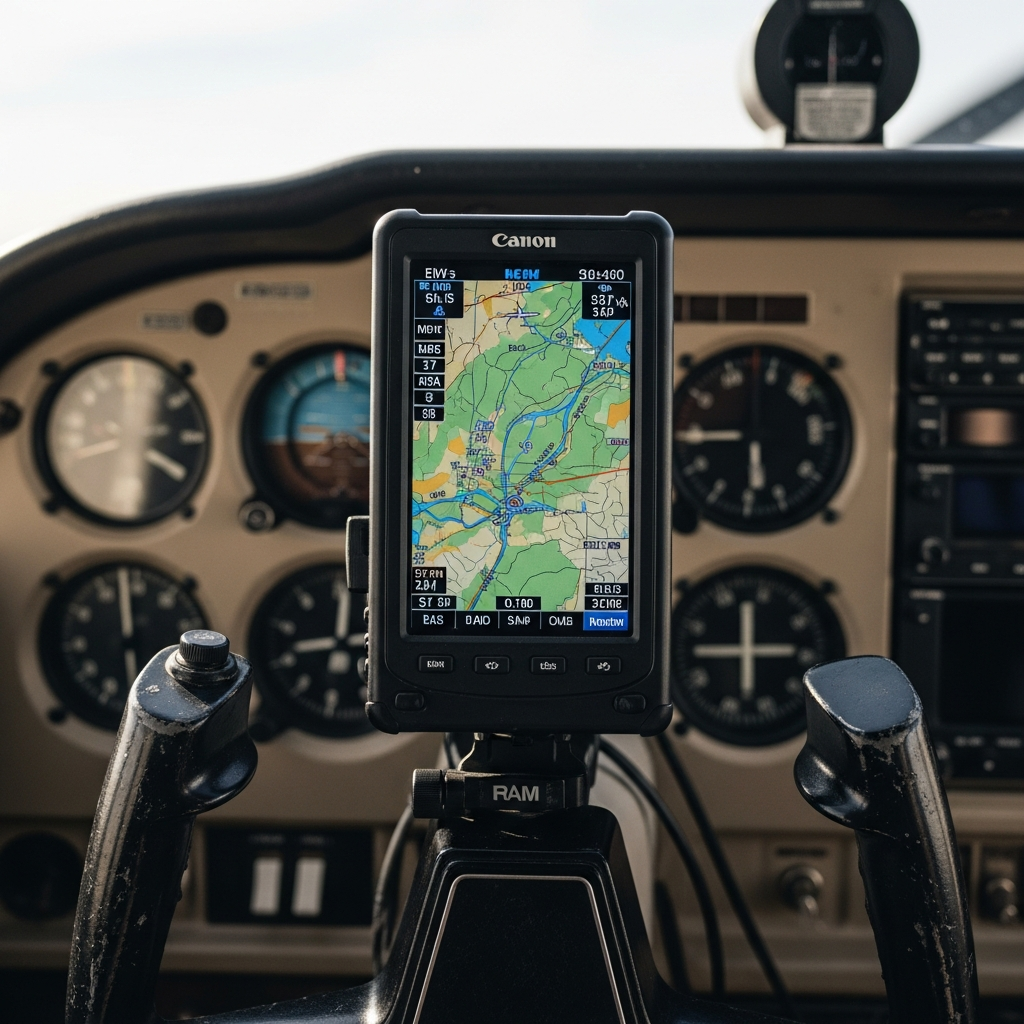
A handheld aviation GPS unit displaying a colorful moving map, mounted on the yoke of a Ce

As an Amazon Associate, Zulu Parts earns from qualifying purchases. Prices and availability are accurate as of the time of purchase.

A reliable handheld aviation GPS can be the difference between a confident cross-country and a stressful one. Whether you’re flying a well-equipped Cessna 172 with a glass panel or an older Piper Cherokee with a basic stack, a portable GPS gives you situational awareness that supplements — and sometimes surpasses — what’s installed on the panel. For student pilots building cockpit familiarity, backcountry flyers who need terrain awareness, or owners of older GA aircraft who aren’t ready to commit to an expensive panel upgrade, a handheld unit delivers a remarkable amount of capability for a relatively modest investment.

The market for portable aviation GPS has matured considerably, and today’s options range from current-generation touchscreen units packed with weather and traffic features to well-loved legacy devices that still earn their place in the flight bag. This guide covers the strongest options available — including a classic that refuses to retire — so you can match the right unit to your flying style and budget.

Our top picks at a glance:

Product Best For Price
Garmin aera 760 Advanced aviation with touchscreen display Check Price →
Garmin aera 660 Mid-range aviation GPS with reliability Check Price →
Garmin GPSMAP 296 (Used) Budget aviation GPS option Check Price →
Garmin GPSMAP 695/696 Integrated panel-mount aviation navigation Check Price →
Bad Elf GNSS Performer Portable external GNSS receiver Check Price →

Garmin aera 760

The Garmin aera 760 sits at the top of the current portable GPS lineup for good reason. Its large 7-inch sunlight-readable touchscreen makes it genuinely usable in bright cockpit conditions, and the portrait-or-landscape mounting flexibility suits a wide range of aircraft interiors. It supports Garmin’s Smart Airspace feature for automatic Class B/C/D highlighting, and when paired with a compatible ADS-B receiver it can display FIS-B weather and TIS-B traffic — giving you a near-panel-level picture without the panel-level price tag.

The aera 760 is best suited to pilots who fly frequently and want their portable unit to carry real workload. The larger screen size makes route planning and terrain awareness notably easier than smaller units, though that size can be a mild inconvenience in tight panel spaces or when stowing the unit. Battery life is reasonable for most cross-country legs, and the unit accepts Garmin Pilot subscription content seamlessly for those already in that ecosystem.

Check Garmin aera 760 aviation GPS price on Amazon →

Garmin aera 660

The Garmin aera 660 is the more compact sibling to the 760, built around a 5-inch touchscreen that strikes a practical balance between readability and portability. It covers all the core bases: Garmin’s aviation database, georeferenced approach charts, terrain awareness, and ADS-B weather and traffic capability when paired with an external receiver. For pilots who want a capable unit that tucks into a flight bag without any drama, the 660 hits the sweet spot.

Where the 660 gives ground to the 760 is simply screen real estate — splitting the display between a moving map and a second data field is more cramped, and pilots with older eyes may prefer the larger format. That said, for a Piper Archer or Beechcraft Bonanza owner who wants a clean, capable portable without a large suction-cup mount dominating the windshield, the aera 660 is an excellent and genuinely well-thought-out choice. It’s one of the most popular handheld aviation GPS units for good reason.

Check Garmin aera 660 aviation GPS price on Amazon →

Garmin GPSMAP 296 (Used)

The Garmin GPSMAP 296 is a legacy unit that preceded touchscreen displays and modern ADS-B integration, yet it maintains a devoted following among GA pilots for good reasons. Its button-driven interface is operable without looking down, a trait some pilots genuinely prefer over touchscreens in turbulence. The color moving map, terrain warning, and XM weather capability (where still functional) made it a benchmark product in its era, and units in good condition remain useful for VFR navigation and situational awareness.

Buying used requires some caution: database subscriptions are no longer updated by Garmin, so treat any installed database as an awareness tool rather than a primary navigation reference — always cross-check against current charts. Battery and hardware condition vary widely on the used market. That said, for a student pilot who wants to build moving-map habits without significant expense, or an owner wanting a backup device with proven reliability, a well-maintained GPSMAP 296 at a reasonable used price still earns its spot in the flight bag.

Check Garmin GPSMAP 296 aviation GPS used price on Amazon →

Garmin GPSMAP 695/696

Bridging the gap between the aging 296 era and today’s touchscreen generation, the Garmin GPSMAP 695 and 696 offer a large display and a hybrid button-plus-touchscreen interface that many pilots find highly intuitive. The 696 in particular features a generous screen size and terrain awareness that was considered class-leading at its release. Used examples are widely available and often represent strong value for owners of older Cessna or Beechcraft aircraft who want a capable color moving map without paying for a brand-new unit.

As with the 296, databases are no longer actively updated, so the same advisory applies: use current paper or EFB charts as your primary reference and treat the GPS as a situational awareness supplement. Hardware reliability on well-cared-for units is generally good, and the larger display makes this an appealing choice as a secondary cockpit display or primary portable for VFR-focused flying.

Check Garmin GPSMAP 696 aviation GPS price on Amazon →

Bad Elf GNSS Performer

The Bad Elf GNSS Performer takes a different approach entirely — it’s a high-sensitivity GPS receiver designed to pair with an iPad or tablet running a full-featured EFB app such as ForeFlight or Garmin Pilot. Rather than being a standalone display unit, it improves the GPS accuracy and reliability of your tablet setup, particularly for faster aircraft or situations where the iPad’s internal GPS struggles. For pilots already deeply invested in the tablet-plus-app workflow, this is a cost-effective way to bring dedicated aviation-grade position quality to that setup.

This is not a standalone replacement for a traditional handheld GPS — it depends entirely on your tablet and app remaining functional. But for Cessna 182 or Piper Comanche owners who fly with an iPad as their primary EFB and want improved GPS performance without buying a full handheld unit, the Bad Elf GNSS Performer is a smart, focused purchase.

Check Bad Elf GNSS Performer aviation GPS receiver price on Amazon →

How to Choose

The right handheld GPS depends heavily on how you fly, what’s already in your cockpit, and how much redundancy you want to build into your avionics setup. Consider these factors carefully before purchasing:

  • Database currency: Current-generation units (aera 660, aera 760) support ongoing database subscriptions. Legacy units do not — factor in whether you’ll rely on the GPS database or supplement with a current EFB app.
  • Screen size vs. cockpit space: A 7-inch display is easier to read but occupies more panel or yoke space. Measure your intended mounting location before committing to a larger unit.
  • ADS-B integration: If you want weather and traffic on your portable, ensure the unit supports an external ADS-B receiver, or budget for a compatible receiver alongside it.
  • Standalone vs. tablet companion: Decide whether you want a fully self-contained GPS unit or a receiver that enhances an existing iPad/EFB workflow — both are valid, but they serve different needs.
  • New vs. used: Used legacy units offer significant savings but come with database limitations and hardware uncertainty. Buy from a reputable seller and verify hardware condition carefully.

FAQ

Can I use a handheld GPS as my primary navigation device legally?

For VFR flight, a handheld GPS can supplement your navigation, but regulations require you carry current charts for the airspace you’re operating in. It is not certified as a primary IFR navigation source unless specifically approved. Always check current FAA regulations and your aircraft’s AFM for guidance.

Do I need a separate ADS-B receiver for weather and traffic?

Yes — units like the Garmin aera 660 and aera 760 display ADS-B weather (FIS-B) and traffic (TIS-B), but they require a compatible external ADS-B receiver to do so. The GPS itself does not include a built-in ADS-B receiver. Garmin’s GDL 52 and similar units are common pairings.

Is a used Garmin GPSMAP 296 or 696 worth buying in 2024?

For VFR situational awareness as a backup or learning tool, yes — provided you buy a unit in good hardware condition and understand that the aviation databases are no longer updated. Always cross-reference with current charts or a current EFB app, and treat the legacy GPS as an awareness supplement rather than a sole navigation reference.

Posted on

Best Handheld Aviation Radios for Backup Comms

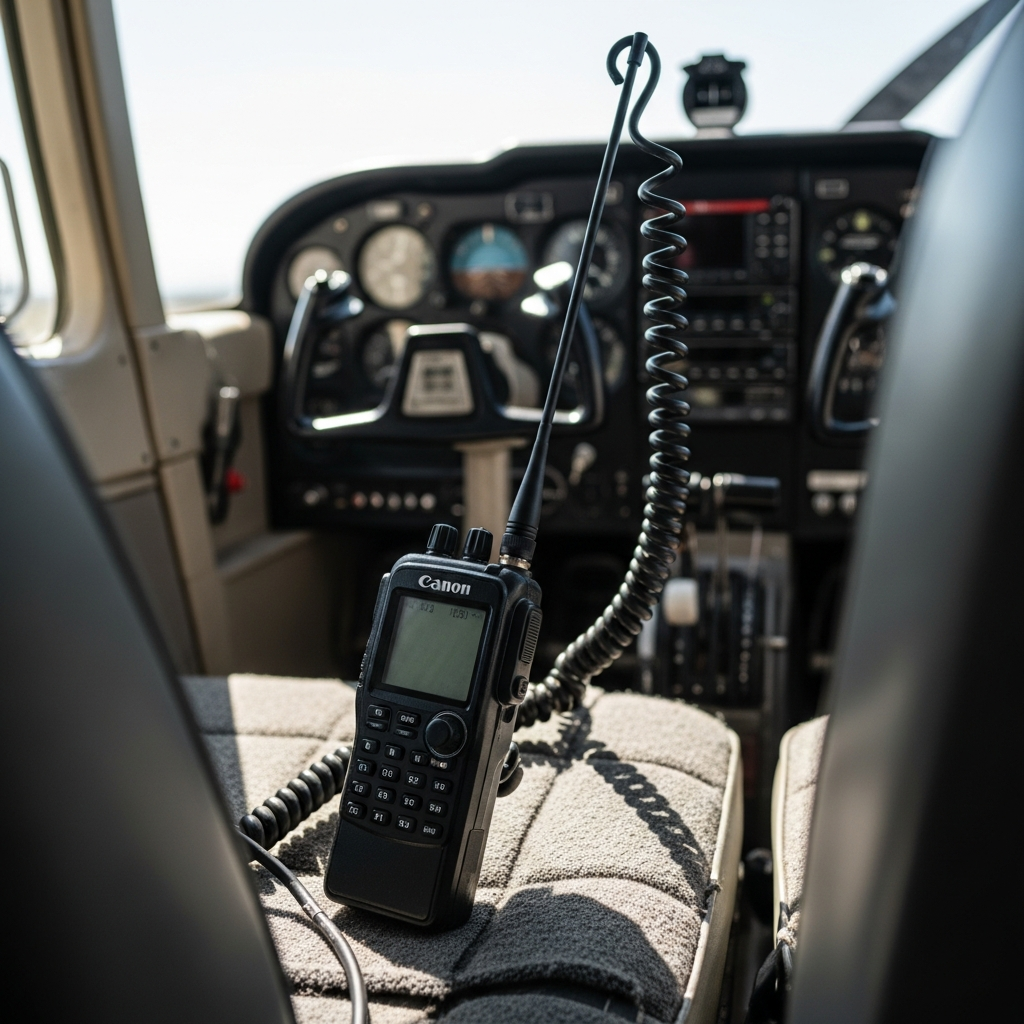
A handheld aviation VHF radio transceiver with antenna up resting on the seat of a small g

As an Amazon Associate, Zulu Parts earns from qualifying purchases. Prices and availability are accurate as of the time of purchase.

A handheld aviation radio is one of the smartest pieces of backup gear you can carry in the cockpit. Whether your panel-mounted comm goes silent on an IFR approach, your electrical system takes a hit, or you simply want a reliable way to call ground after landing somewhere unfamiliar, a quality handheld keeps you in the game. For Cessna, Piper, and Beechcraft owners flying under Part 91, it’s not a required item — but experienced pilots treat it as essential kit, right alongside a spare headset and a paper sectional.

The handheld aviation radio market is dominated by a handful of serious players, and the options below represent the best choices across a range of budgets and use cases. All of them transmit and receive on standard aviation VHF comm frequencies (118.000–136.975 MHz), and some add navigation, weather, and Bluetooth capabilities that can genuinely augment your situational awareness. Here’s what you need to know before you buy.

Our top picks at a glance:

Product Best For Price
Yaesu FTA-750L Advanced pilots needing extended range Check Price →
Yaesu FTA-550L Budget-conscious general aviation pilots Check Price →
Icom IC-A25N Reliable VFR and casual flying Check Price →
Icom IC-A16B Compact backup or student pilot use Check Price →
Sporty’s SP-400 Training and primary flight use Check Price →

Yaesu FTA-750L

The Yaesu FTA-750L sits at the top of Yaesu’s handheld lineup and earns its place there. It includes a built-in GPS receiver, VOR/ILS navigation capability, and NOAA weather receiver — a combination that makes it far more than just a backup comm radio. For a pilot who occasionally rents or borrows aircraft with minimal avionics, this radio can stand in as a meaningful nav aid. The display is clear, the build quality is solid, and battery life is respectable for a feature-rich unit.

The trade-off is price and complexity. If you only need a straightforward comm backup, you’re paying for features you may never use. But for the pilot who wants maximum capability in a single handheld, the FTA-750L is the most capable option in Yaesu’s current lineup and is hard to argue with on a long cross-country.

Check Yaesu FTA-750L handheld aviation radio price on Amazon →

Yaesu FTA-550L

The Yaesu FTA-550L steps down from the 750L by removing the built-in GPS while retaining strong transmit power, clear audio, and Yaesu’s well-regarded build quality. It still covers the full VHF aviation comm band and includes a NOAA weather receiver, making it a well-rounded backup radio at a more accessible price point. The interface is intuitive for a pilot already familiar with Yaesu products, and the Li-ion battery pack keeps the unit light and compact.

This is an excellent choice for pilots who already have a portable GPS or EFB tablet handling navigation and simply want dependable, no-fuss voice communication as a backup. You get the Yaesu reliability without funding features you’re duplicating elsewhere in the cockpit.

Check Yaesu FTA-550L handheld aviation radio price on Amazon →

Icom IC-A25N

The Icom IC-A25N is one of the most feature-packed handheld aviation radios available from any manufacturer. It offers built-in GPS, VOR navigation reception, active noise-canceling on the microphone, and Bluetooth connectivity for pairing with compatible headsets — a genuinely useful feature for pilots who prefer a wireless cockpit setup or want to use the radio hands-free. Icom’s reputation for audio clarity and receiver sensitivity is well established, and the A25N upholds it.

The Bluetooth and noise-canceling capabilities make the IC-A25N particularly appealing for pilots doing a lot of pattern work at busy fields or operating in high-noise environments. It’s on the pricier end of the handheld spectrum, but if Bluetooth integration with your headset matters to you, no other handheld on this list offers it. Just confirm your headset is Bluetooth-compatible before committing.

Check Icom IC-A25N handheld aviation radio price on Amazon →

Icom IC-A16B

The Icom IC-A16B is a more straightforward handheld that covers VHF aviation comm frequencies with solid transmit power and Icom’s characteristically clean receiver performance. It lacks GPS and Bluetooth, but that simplicity translates into ease of operation — you won’t be hunting through menus when you need to punch in a frequency fast. The build is rugged and the controls are logically laid out, which matters when you’re already managing a developing abnormal situation in the cockpit.

For pilots who want a trusted, capable comm-only backup without paying for navigation features they’ll never rely on in an emergency, the IC-A16B is a practical and well-respected choice. It’s also a popular option for student pilots and flight schools where straightforward operation matters most.

Check Icom IC-A16B handheld aviation radio price on Amazon →

Sporty’s SP-400

The Sporty’s SP-400 is a well-known alternative in the handheld aviation radio space, offered by a company with deep roots in pilot supplies and flight training. It’s designed specifically with pilots in mind — not amateur radio operators — so the frequency input, channel scanning, and overall interface are optimized for aviation use right out of the box. It includes a weather receiver and features a large, easy-to-read display.

The SP-400 is a solid choice for pilots who want something genuinely pilot-friendly and are comfortable buying from a name they already trust from the Sporty’s catalog. It may not match the raw spec sheet of the top-tier Icom or Yaesu units, but for straightforward backup comm duty it performs reliably and is worth considering alongside the Japanese-brand options.

Check Sporty’s SP-400 handheld aviation radio price on Amazon →

How to Choose

The right handheld aviation radio depends on how you fly, what’s already in your panel, and how much redundancy you want to build into a single device. All of the radios above will do the fundamental job — putting your voice on frequency when your primary comm is unavailable. The differences come down to additional capabilities and interface preferences.

  • GPS and navigation: If you want a handheld that can also serve as a backup nav source, look at the Yaesu FTA-750L or Icom IC-A25N. If you already have a tablet or portable GPS, skip this feature and save money.
  • Bluetooth capability: Only the Icom IC-A25N offers Bluetooth headset connectivity among these picks. Confirm headset compatibility before purchasing.
  • Simplicity under pressure: Radios like the IC-A16B and FTA-550L have fewer modes and menus. For many pilots, that’s a feature — you can operate them quickly when stress is elevated.
  • Battery life and type: Consider whether the radio uses a proprietary Li-ion pack or accepts AA batteries as a backup power source. AA compatibility can be a real advantage when traveling to remote strips.
  • Audio quality and receiver sensitivity: All of these units perform well, but read pilot forums for real-world reports on how they handle busy frequencies and background noise in your type of aircraft.

FAQ

Do I need a license to use a handheld aviation radio?

To transmit on aviation frequencies in the United States, you need an FCC Restricted Radiotelephone Operator Permit, which is a straightforward application. Your aircraft also needs a radio station license if you’re flying internationally. For domestic VFR flying, enforcement is minimal, but the license is required and inexpensive to obtain.

Can I use a handheld aviation radio with my aircraft headset?

Most handheld aviation radios include a standard GA dual-plug adapter (or the adapter is available as an accessory), allowing you to connect a conventional aviation headset. This is strongly recommended — using a handheld with its built-in speaker and mic in a noisy cockpit is far less effective than routing it through your headset.

How much transmit power do I actually need?

Most quality handheld aviation radios transmit at 5 to 6 watts on high power, which is adequate for normal air-to-air and air-to-ground communication within reasonable range. Some units offer selectable power levels to conserve battery. For backup purposes, the high-power setting of any radio on this list is sufficient for communicating with ATC and other aircraft in typical general aviation scenarios.

Posted on

Best Portable ADS-B Receivers for Pilots in 2026

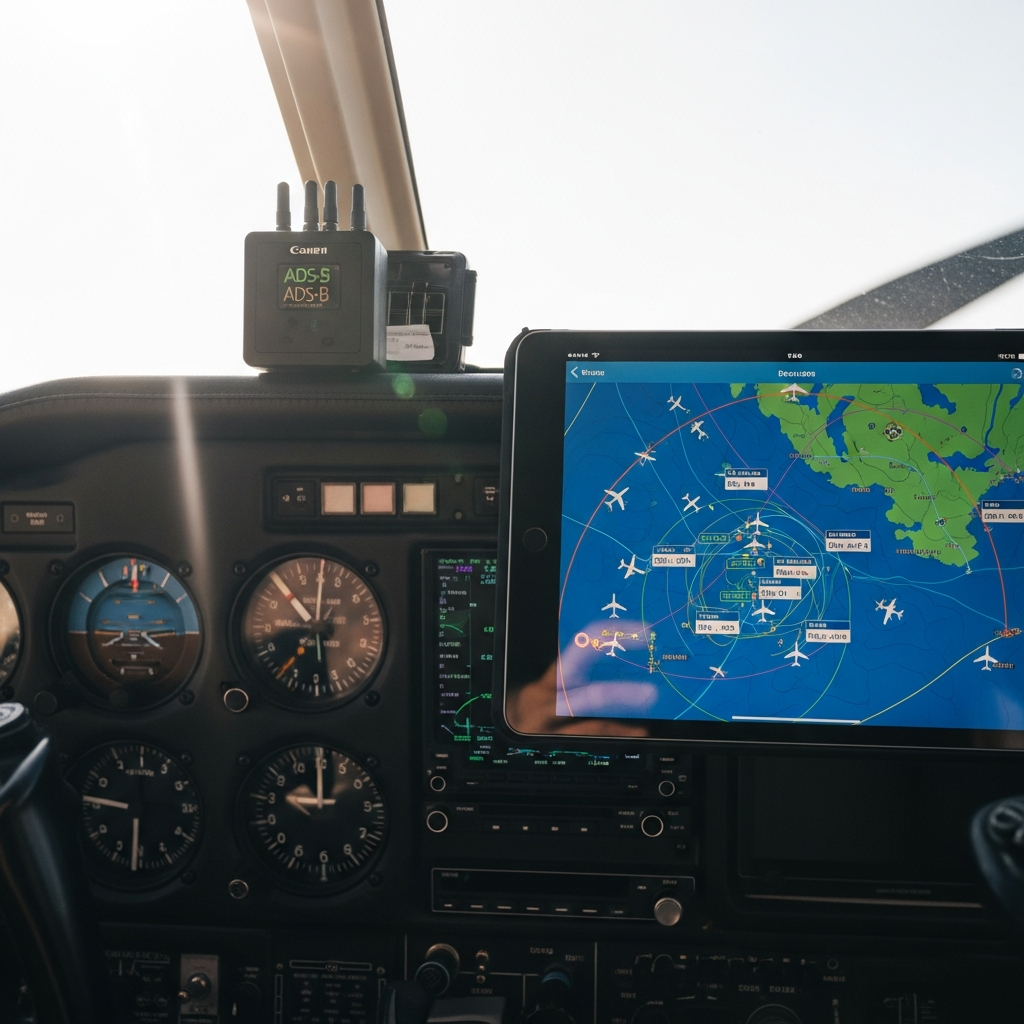
A portable ADS-B receiver device on a light aircraft glareshield next to a tablet showing

As an Amazon Associate, Zulu Parts earns from qualifying purchases. Prices and availability are accurate as of the time of purchase.

Situational awareness in the cockpit has never been more accessible than it is today, thanks to portable ADS-B receivers that stream real-time traffic, weather, and GPS data directly to your tablet or phone. Whether you’re a weekend VFR pilot flying a Cessna 172 or a seasoned IFR pilot in a Beechcraft Bonanza, a portable ADS-B receiver gives you a meaningful safety upgrade without a costly panel installation. These devices are particularly valuable if your aircraft isn’t yet equipped with a certified ADS-B Out solution, or if you simply want a redundant, portable backup to your existing avionics.

The market has matured considerably, and a handful of devices now dominate the cockpit bags of serious GA pilots. The best units combine ADS-B In reception (978 UAT and/or 1090 MHz), SiriusXM weather capability, AHRS (attitude data), and GPS into a compact package that pairs with apps like ForeFlight, Garmin Pilot, or FlyQ. Below are the top portable ADS-B receivers worth considering in 2026, with honest takes on who each one suits best.

Our top picks at a glance:

Product Best For Price
ForeFlight Sentry Full-featured cockpit situational awareness system Check Price →
ForeFlight Sentry Mini Portable weather and traffic awareness Check Price →
ForeFlight Sentry Plus Enhanced situational awareness with advanced features Check Price →
Stratus 3 Wireless aviation weather and traffic receiver Check Price →
Garmin GDL 52 Integrated datalink weather and traffic receiver Check Price →

ForeFlight Sentry

The original Sentry from ForeFlight remains one of the most well-rounded portable ADS-B receivers available. It receives both 978 MHz UAT and 1090 MHz Extended Squitter, providing dual-band ADS-B In coverage, and it includes a built-in AHRS sensor for backup attitude display in ForeFlight. Battery life is solid for typical training or cross-country flights, and the integration with the ForeFlight app is seamless — traffic and weather populate instantly with minimal setup.

The Sentry is best suited to ForeFlight users who want a reliable all-in-one device without paying a premium for features they don’t need. It won’t do SiriusXM, so if you regularly fly in areas with limited ADS-B ground station coverage, that’s a real trade-off to weigh. For most pilots flying in the lower 48, it’s an excellent value and a trusted daily driver.

Check ForeFlight Sentry ADS-B receiver price on Amazon →

ForeFlight Sentry Mini

The Sentry Mini is ForeFlight’s stripped-down, ultra-compact option, and it earns its place in the lineup by being genuinely pocketable. It covers both ADS-B bands and delivers traffic and weather to the ForeFlight app just like its bigger sibling, but it omits the AHRS attitude sensor to keep the size and price down. If you fly VFR primarily and don’t need the backup attitude reference, the Mini gives you nearly the same core functionality in a significantly smaller package.

This device is a natural fit for student pilots, flight instructors who jump between multiple aircraft, or anyone who wants a no-fuss portable that slips into a flight bag pocket. The trade-off is clear: no attitude data, and the smaller form factor means a smaller battery. For straightforward traffic and weather awareness, though, it’s hard to beat its simplicity.

Check ForeFlight Sentry Mini ADS-B receiver price on Amazon →

ForeFlight Sentry Plus

The Sentry Plus sits at the top of ForeFlight’s portable receiver lineup, adding SiriusXM satellite weather capability on top of everything the standard Sentry offers. That means full NEXRAD, METARs, TAFs, TFRs, and more delivered via satellite — no ADS-B ground station required. For pilots who frequently fly in mountainous terrain, offshore routes, or other areas where ADS-B ground coverage can be spotty, the Sentry Plus eliminates that gap entirely. It also retains dual-band ADS-B In and the AHRS sensor.

The Sentry Plus commands a notable price premium, and it also requires an active SiriusXM Aviation subscription to unlock the satellite weather features. If you’re committed to the ForeFlight ecosystem and do serious cross-country or IFR flying, the upgrade cost is justifiable. Occasional VFR flyers are probably better served by the standard Sentry and saving the subscription cost.

Check ForeFlight Sentry Plus ADS-B SiriusXM receiver price on Amazon →

Stratus 3

The Stratus 3 from Appareo is a direct competitor to the ForeFlight Sentry, offering dual-band ADS-B In, a built-in AHRS, and a GPS receiver in a compact rectangular form factor. It integrates natively with ForeFlight and has earned a strong reputation for reliable ADS-B reception and good antenna performance. One practical advantage is its charging flexibility — it can sit on the glareshield or mount via suction cup, and the LED indicators make it easy to confirm it’s connected and receiving without pulling out your tablet.

The Stratus 3 is a solid choice for pilots who want a proven, well-supported device and aren’t locked into a specific ecosystem. It doesn’t offer SiriusXM weather, so it carries the same limitation as the base Sentry on that front. Build quality is good, and Appareo has a track record of supporting their devices with firmware updates. It’s a trustworthy option, especially if you can find it at a competitive price point.

Check Appareo Stratus 3 ADS-B receiver ForeFlight price on Amazon →

Garmin GDL 52

The Garmin GDL 52 is the choice for pilots deep in the Garmin ecosystem, combining dual-band ADS-B In with SiriusXM weather in a device designed to pair primarily with Garmin Pilot. It also works with other apps via GDL format, but the tightest integration is with Garmin’s own platform. The GDL 52 includes an internal GPS and an AHRS sensor, making it a genuinely full-featured portable unit competitive with the Sentry Plus on capability.

If you use Garmin avionics in the panel and Garmin Pilot on your tablet, the GDL 52 creates a coherent, consistent experience that’s hard to replicate with cross-brand mixing. Like the Sentry Plus, SiriusXM requires a paid subscription, so factor that into the total cost of ownership. Pilots who prefer ForeFlight will find the integration less seamless, so this one is squarely aimed at the Garmin faithful.

Check Garmin GDL 52 ADS-B SiriusXM portable receiver price on Amazon →

How to Choose

The right portable ADS-B receiver depends heavily on your flying profile, your preferred EFB app, and how much redundancy you want in the cockpit. All of the devices above are capable, but small differences matter when you’re trying to keep cockpit workload low.

  • EFB app compatibility: ForeFlight users get tighter integration with Sentry devices; Garmin Pilot users will find the GDL 52 the most cohesive choice.
  • AHRS / attitude data: If you want a backup artificial horizon on your tablet, make sure your device includes an AHRS sensor — the Sentry Mini does not.
  • SiriusXM weather: Essential for pilots who fly in areas with limited ADS-B ground station coverage or who regularly operate over water and mountains. Requires an ongoing subscription cost.
  • Dual-band vs. single-band ADS-B: Dual-band (978 UAT + 1090 ES) gives you the most complete traffic picture; all of the devices listed here are dual-band.
  • Portability and battery life: Consider how many aircraft you fly and whether the device needs to be truly pocketable or can live in a dedicated spot on the glareshield.

FAQ

Do I still need ADS-B Out if I have one of these receivers?

Yes. These are ADS-B In devices — they receive traffic and weather data but do not transmit your position. FAA ADS-B Out requirements for controlled airspace mandate a certified panel-mounted or portable transmitter that meets TSO standards. A portable receiver alone does not satisfy that requirement.

Can I use a portable ADS-B receiver as my sole weather source for IFR flight planning?

These devices are excellent supplements to official weather briefings, but they should not replace a proper preflight weather briefing through 1800wxbrief.com or a certified aviation weather service. Treat the in-flight datalink weather as a strategic awareness tool, not as your primary source for go/no-go decisions.

Will these devices work with apps other than ForeFlight or Garmin Pilot?

Most portable ADS-B receivers broadcast over Wi-Fi or Bluetooth in a standard format, and many popular EFB apps — including FlyQ, WingX, and others — support them. Always verify compatibility with your specific app and device combination before purchasing, as feature depth can vary outside the primary supported app.

Posted on

Best Aviation Headsets 2025: Complete Buying Guide

Choosing the right aviation headset is one of the most important decisions a pilot makes. A quality headset protects your hearing, reduces fatigue, ensures clear communication with ATC, and can transform multi-hour flights from exhausting to enjoyable. This comprehensive guide covers everything you need to know to make an informed decision in 2025.

Table of Contents

Understanding Aviation Headsets

Aviation headsets serve three critical functions:

1. Hearing Protection: Aircraft cockpits are loud—typically 85-100+ dB in piston aircraft. Without protection, pilots risk permanent hearing damage. Quality headsets reduce noise exposure to safe levels.

2. Communication: Clear two-way communication with ATC, passengers, and other aircraft is essential for safe flight. Headsets provide microphones for transmission and speakers for reception.

3. Fatigue Reduction: Noise causes fatigue even when it doesn’t damage hearing. Reducing cockpit noise improves pilot performance and makes flying more enjoyable.

Unlike consumer headphones, aviation headsets must meet demanding requirements: extreme durability, reliable operation in temperature extremes, compatibility with aircraft intercoms, and performance in high-noise environments.

ANR vs. Passive: The Fundamental Choice

The first decision is whether to buy an Active Noise Reduction (ANR) or passive headset. Understanding the difference is crucial.

Passive Headsets

Passive headsets reduce noise through physical barriers—dense ear seals, sound-absorbing materials, and tight fit. They require no batteries and have no electronics beyond the basic microphone circuit.

Passive Pros:

  • No batteries—always works
  • Simpler, fewer things to fail
  • Lower cost ($200-400)
  • Extreme durability
  • Effective at high frequencies

Passive Cons:

  • Limited low-frequency noise reduction
  • Higher clamping force required (less comfortable)
  • Heavier construction needed
  • More fatigue on longer flights

Best For: Backup headsets, flight training on a budget, pilots who fly infrequently, situations requiring absolute reliability.

ANR (Active Noise Reduction) Headsets

ANR headsets use microphones and speakers to generate sound waves that cancel cockpit noise—particularly effective at the low frequencies that cause the most fatigue. They require battery power.

ANR Pros:

  • Dramatically better low-frequency reduction
  • Significantly less fatigue on long flights
  • Lower clamping force possible (more comfortable)
  • Lighter weight designs possible
  • Modern features (Bluetooth, audio mixing)

ANR Cons:

  • Requires batteries
  • More complex electronics
  • Higher cost ($600-1,500)
  • Potential for electronic failure

Best For: Regular flyers, long cross-countries, anyone who values comfort and fatigue reduction, professional pilots.

The Verdict

For pilots who fly regularly (25+ hours per year), ANR is worth the investment. The fatigue reduction on flights over 2 hours is dramatic and cumulative—you’ll be a safer, more alert pilot. For occasional flyers or those on tight budgets, a quality passive headset like the David Clark H10-13.4 remains a solid choice.

Key Features Explained

Weight

Headset weight matters more than you might think. Over a 4-hour flight, even 2-3 ounces of difference become noticeable. Premium headsets range from 12-15 ounces; passive headsets are typically 16+ ounces.

Battery Life

ANR headsets run on batteries (usually 2 AA). Battery life ranges from 30 to 50+ hours depending on model. Longer is better, but even 30 hours means changing batteries monthly for most pilots.

Bluetooth

Modern headsets include Bluetooth for music, phone calls, and tablet connectivity. Audio from Bluetooth sources is mixed with intercom, with priority given to radio communications. Dual-device pairing (connecting phone and tablet simultaneously) is available on premium models.

Connector Types

  • Dual GA plugs: Standard in most GA aircraft—two plugs, one for microphone, one for headphone.
  • 6-pin LEMO: Single connector used in Cirrus and some high-end installations. Provides power to headset.
  • U-174: Military-style plug used in helicopters.

Most pilots need dual GA plugs. Check your aircraft before ordering.

Ear Seal Materials

  • Foam: Basic, inexpensive, adequate noise reduction
  • Gel: Better seal, more comfortable, works better with glasses
  • Protein Leather: Premium synthetic, good comfort and durability
  • Sheepskin: Top-tier comfort (optional upgrade on some models)

Warranty

Warranty length varies significantly: 3 years (Faro) to 7 years (Lightspeed). Longer warranties indicate manufacturer confidence and protect your investment.

Our Top Picks for 2025

Newest Flagship: Lightspeed Zulu 4 ANR

Lightspeed’s latest flagship, the Zulu 4 ANR, builds on the proven Zulu 3 platform with refined active noise reduction and updated comfort. For pilots buying a brand-new premium headset today, the Zulu 4 is Lightspeed’s current state-of-the-art.

Worth knowing: The previous-generation Lightspeed Zulu 3 remains an excellent headset — many pilots still prefer it, and with the Zulu 4 now shipping, the Zulu 3 is often available at a lower price. If you’re budget-conscious or already own a Zulu 3, it’s still a strong buy.

Check Zulu 4 Price on Amazon
Check Zulu 3 Price on Amazon

Best Overall: Lightspeed Zulu 3 — $899

The Zulu 3 offers the best combination of ANR performance, comfort, warranty, and value. It delivers approximately 95% of Bose’s noise cancellation at 62% of the price, backed by the industry’s best 7-year warranty and legendary customer service. The 30-day trial period eliminates purchase risk.

Best For: Most pilots who want premium performance without premium pricing.

Best Premium: Bose A30 — $1,449

The A30 is simply the best aviation headset available. Three selectable ANR modes, class-leading noise cancellation, lightest weight (12.3 oz), and exceptional comfort justify the premium for pilots who fly frequently or demand the best.

Best For: Frequent flyers, professional pilots, those who prioritize maximum comfort and performance.

Best Value ANR: Faro G3 ANR — $599

The G3 ANR delivers genuine active noise reduction at a price accessible to students and budget-conscious pilots. It provides approximately 80% of premium ANR performance at 40% of the price—transformative for anyone upgrading from passive.

Best For: Students, first-time ANR buyers, pilots on a budget.

Best Passive: David Clark H10-13.4 — $359

The legendary H10-13.4 has trained more pilots than any headset in history. Bulletproof reliability, exceptional durability, and no batteries make it the perfect backup headset or primary for occasional flyers. Some H10-13.4s are still working after 30+ years.

Best For: Backup headset (every pilot should own one), students, occasional flyers.

Best Durability: David Clark ONE-X — $895

David Clark’s ANR offering combines their legendary durability with modern features. The hybrid ANR design continues working (in passive mode) if batteries fail. Best battery life in class (50+ hours) and Made-in-USA quality.

Best For: Flight schools, rental/club pilots, working pilots who need abuse-resistant equipment.

Most Innovative: Lightspeed Delta Zulu — $1,199

The only headset with built-in ADS-B, the Delta Zulu provides traffic awareness directly in your ears. Verbal traffic alerts keep your eyes outside. Best for VFR pilots without panel ADS-B.

Best For: VFR pilots in non-ADS-B-equipped aircraft.

Complete Comparison Chart

Headset Type Weight Battery Bluetooth Warranty Price
Bose A30 ANR 12.3 oz 45+ hrs Dual 5 yr $1,449
Lightspeed Zulu 3 ANR 12.8 oz 40+ hrs Yes 7 yr $899
Lightspeed Delta Zulu ANR+ADS-B 14.5 oz 40+ hrs Enhanced 7 yr $1,199
David Clark ONE-X Hybrid ANR 12.3 oz 50+ hrs Yes 5 yr $895
Faro G3 ANR ANR 14 oz 30+ hrs Yes 3 yr $599
David Clark H10-13.4 Passive 16 oz N/A No 5 yr $359

Recommendations by Budget

Under $400: David Clark H10-13.4

At this price point, the H10-13.4 is the only serious option. It’s a proven, reliable headset that will last decades. Don’t be tempted by cheap Amazon specials—they won’t last and may have inadequate noise reduction.

$500-700: Faro G3 ANR

The G3 ANR provides real active noise reduction at an accessible price. It’s transformative for anyone upgrading from passive. Budget ANR beats premium passive for comfort and fatigue.

$800-1,000: Lightspeed Zulu 3 or David Clark ONE-X

This is the sweet spot for most serious pilots. The Zulu 3 offers the best combination of ANR, warranty, and value. The ONE-X prioritizes durability. Both are excellent long-term investments.

$1,000-1,200: Lightspeed Delta Zulu

For pilots wanting integrated ADS-B, the Delta Zulu is unique. Otherwise, save money with the standard Zulu 3.

$1,400+: Bose A30

The A30 is for pilots who want the absolute best. The combination of noise cancellation, weight, and comfort is unmatched. If budget permits and you fly regularly, you won’t regret it.

Recommendations by Use Case

Student Pilots

Best: Faro G3 ANR ($599)
Budget Option: David Clark H10-13.4 ($359)

Students benefit enormously from ANR—better hearing means better learning. The G3 ANR provides real fatigue reduction at an accessible price. If budget is extremely tight, the H10-13.4 is the proven choice.

Weekend Warriors (25-50 hours/year)

Best: Lightspeed Zulu 3 ($899)

For pilots who fly regularly but not professionally, the Zulu 3 offers the ideal balance. Premium ANR, excellent warranty, and reasonable price make it the sensible choice.

Cross-Country Enthusiasts

Best: Bose A30 ($1,449) or Lightspeed Zulu 3 ($899)

Long flights demand the best noise cancellation and comfort. If budget allows, the A30’s weight and ANR advantages compound over 4+ hour flights. The Zulu 3 is an excellent alternative at lower cost.

Flight Schools

Best: David Clark ONE-X ($895) or H10-13.4 ($359)

Schools need durability above all else. The ONE-X brings ANR benefits while surviving student abuse. The H10-13.4 remains the budget-friendly fleet option.

Professional Pilots

Best: Bose A30 ($1,449)

When flying is your job, invest in the best tools. The A30’s comfort and ANR performance improve safety and quality of life on long duty days.

VFR Pilots Without Panel ADS-B

Best: Lightspeed Delta Zulu ($1,199)

The integrated ADS-B receiver provides traffic awareness without additional equipment. Audio traffic alerts keep your eyes outside.

Buying Guide: Where to Purchase

Authorized Dealers

Purchase from authorized dealers to ensure warranty coverage and genuine products. Major aviation retailers (Sporty’s, Aircraft Spruce, MyPilotStore) are safe choices.

Manufacturer Direct

Lightspeed sells direct with their 30-day trial—an excellent way to test before committing. Bose sells through authorized retailers.

Used Market

Used headsets can offer value, particularly David Clarks which last forever. Inspect carefully and factor in ear seal replacement cost. Be cautious with used electronics—ANR components can fail.

Avoid

Be wary of Amazon “aviation headsets” under $200. Many have inadequate noise reduction and poor durability. Quality costs money in aviation equipment.

Frequently Asked Questions

How long should an aviation headset last?
Passive headsets (David Clark H10) can last 20-30+ years with maintenance. ANR headsets typically last 5-10 years depending on use and care. Premium ANR (Bose, Lightspeed) tends to outlast budget options.

Can I use my headset with glasses?
Yes. Modern headsets are designed to seal around glasses temples. Gel or protein leather ear seals work better than foam with glasses. Some pilots with thick frames prefer specific models—test if possible.

Do I need different headsets for different aircraft?
Usually no. Dual GA plugs work in most GA aircraft. You may need LEMO or helicopter connectors for specific aircraft types—check your panel before ordering. Some headsets offer connector kits for multiple aircraft.

How important is weight?
More important than most pilots realize. The difference between 12 oz and 16 oz is significant over a 4-hour flight. If you do regular long flights, prioritize lighter headsets.

Should I buy the Bose A30 or Lightspeed Zulu 3?
Both are excellent. The A30 has slightly better ANR, lighter weight, and selectable modes. The Zulu 3 has a longer warranty, lower price, and superior customer service. For most pilots, the Zulu 3’s value proposition is stronger. If maximum performance matters and budget isn’t constrained, the A30 is marginally better.

Are cheap Amazon headsets worth it?
Generally no. Budget headsets under $200 often have inadequate noise reduction, poor durability, and may not meet safety standards. Invest in quality equipment for aviation.

Conclusion

A quality headset is an investment in safety, comfort, and flying enjoyment. For most serious pilots, we recommend the Lightspeed Zulu 3 as the best overall value—premium performance, excellent warranty, accessible price. Budget-conscious pilots should consider the Faro G3 ANR for real ANR under $600. Pilots who want the absolute best will find the Bose A30 worth every penny.

Whatever you choose, don’t skimp on your headset. It’s the most-used piece of equipment in your flight bag, and quality pays dividends in reduced fatigue, better communication, and protected hearing. Your ears—and your passengers—will thank you.

Shop Aviation Headsets on Amazon →

As an Amazon Associate, Zulu Parts earns from qualifying purchases. Our recommendations are based on independent testing and merit, not affiliate relationships.

Posted on

David Clark H10-13.4 Review: The Industry Standard

The David Clark H10-13.4 is the most legendary headset in aviation history. More pilots have trained with this headset than any other. Walk into any flight school in America, and you’ll find H10-13.4s hanging on the wall—probably the same ones that were there 20 years ago, still working perfectly. Here’s our comprehensive assessment of this industry icon.

A Legend Earned Over Decades

The H10-13.4 isn’t just a product—it’s an institution. Introduced in the 1970s and continuously refined since, this headset has outlasted countless competitors, technological shifts, and generational changes in aviation. There’s a reason it’s still in production after 50+ years: it works.

The “H10” designation refers to David Clark’s general aviation headset line. The “13.4” refers to the ear cup size (13.4 ounces of clamping force when the specification was set—terminology has evolved since). This specific model optimizes passive noise reduction for single-engine piston aircraft, the workhorses of flight training and personal aviation.

Detailed Specifications

Specification David Clark H10-13.4
Headset Type Passive (no electronics)
Weight 16 oz (454g)
Noise Reduction ~23 dB passive (NRR)
Battery None required
Bluetooth No
Microphone M-4 electret (noise-canceling)
Ear Seals Gel or foam options
Manufacturing Made in USA (Worcester, MA)
Connector Dual GA plugs
Warranty 5 years
MSRP $359

The Case for Passive Headsets in 2025

With ANR headsets now available at multiple price points, why would anyone buy a passive headset? Several compelling reasons:

1. Absolute Reliability: No batteries means nothing to fail. The H10-13.4 will work every single time you put it on. There’s no “low battery” warning mid-flight, no forgetting to charge overnight, no electronics to malfunction. Plug it in, and it works.

2. Simplicity: There are no buttons, no modes, no app, no pairing process. The H10-13.4 is beautifully simple—put it on your head, plug in the cable, fly.

3. Longevity: H10-13.4 headsets from the 1980s are still in active use. With periodic ear seal replacement, these headsets effectively last forever. The economics over a 20-30 year flying career favor buying quality once rather than replacing electronic headsets every 5-10 years.

4. Backup Headset: Even pilots with $1,400 Bose A30s keep an H10-13.4 in their flight bag as backup. When your primary headset fails, the H10 is there. Always.

5. Flight Training: For students who might fly 50-100 hours total during training, investing $1,000+ in ANR may not make economic sense. The H10-13.4 provides adequate protection for training flights at a reasonable price.

Passive Noise Reduction Performance

The H10-13.4 provides approximately 23 dB of passive noise reduction rating (NRR)—among the best for passive headsets. This attenuation comes entirely from physical barriers: dense ear seals that block sound, ear cup materials that absorb vibration, and careful engineering of the acoustic cavity.

In practical terms, the H10-13.4 makes a Cessna 172 cockpit tolerable rather than deafening. You’ll still hear significant engine noise, but communication is clear and hearing damage is prevented. It’s the aviation equivalent of good foam earplugs—effective but not magical.

What to Expect:

  • Cessna 172/182: Comfortable for 1-2 hours, noticeable fatigue after 3+ hours
  • Piper Cherokee/Warrior: Similar experience to Cessna
  • Louder aircraft (certain experimentals, older designs): Fatigue sets in faster
  • Very loud environments (helicopters, open cockpit): Consider ANR instead

Comfort: The Trade-off for Noise Reduction

The H10-13.4’s primary weakness is comfort. High passive noise reduction requires firm clamping force to seal the ear cups against your head. This works acoustically but creates pressure points.

The Headache Factor: Many pilots experience headaches from the H10-13.4 during their first few flights. The headband pressure on the crown and the clamping force around the ears take adjustment. Most pilots adapt within 5-10 hours of use as the headset “breaks in” and their heads adjust.

Mitigation Strategies:

  • Upgrade to gel ear seals (factory option or aftermarket)—significantly improves comfort
  • Add a headband pad or sheepskin cover to distribute crown pressure
  • Adjust headband tension by carefully bending the steel headband (at your own risk)
  • Wear the headset at home while watching TV to accelerate break-in

Extended Wear Experience:

  • Hour 1: Noticeable clamping, manageable
  • Hours 2-3: Increasing awareness of pressure points
  • Hours 3+: Most pilots want a break from the headset

This comfort profile is precisely why many pilots upgrade to ANR headsets once they commit to flying seriously. The fatigue difference between H10-13.4 and a Bose A30 over a 4-hour flight is dramatic.

Build Quality and Durability

The H10-13.4’s legendary status stems largely from its absurd durability. These headsets simply refuse to die.

Construction Highlights:

  • Steel headband: Not plastic, not aluminum—actual steel that can be bent back into shape if deformed
  • Robust ear cup pivots: The mechanism that allows ear cups to rotate is overbuilt and essentially indestructible
  • Quality cables: The coiled cable and connector assembly are built to survive years of abuse
  • Rebuildable design: Individual components (ear seals, mic windscreen, headpad) are replaceable

Real-World Longevity: It’s common to find H10-13.4 headsets with 30+ years of continuous use. Flight schools report headsets surviving thousands of student hours. The limiting factor is typically ear seal degradation, which is easily remedied with $20-30 replacement parts.

Microphone Quality

The H10-13.4 uses David Clark’s M-4 electret microphone, which provides clear transmissions that ATC consistently rates as readable. The noise-canceling design rejects background cockpit noise effectively.

Transmission quality is excellent—often better than budget ANR headsets with inferior microphones. You won’t have controllers asking you to repeat because of microphone issues.

Real-World Usage Scenarios

Student Pilots

The H10-13.4 remains the default recommendation for students on a budget. It provides adequate protection for training flights, typically lasting through private pilot training and beyond. The money saved versus ANR can go toward additional flight hours.

Backup Headset

The most common use case for experienced pilots is as a backup headset. Keep an H10-13.4 in your flight bag alongside your primary ANR headset. When batteries die or electronics fail, you have guaranteed backup. When a passenger needs a headset, you have one to loan.

Flight Schools

Schools buy H10-13.4s by the dozen because they survive student abuse. The headsets get dropped, yanked by cords, stored improperly, and generally mistreated—and keep working. The economics are unbeatable.

Occasional Flyers

If you fly 10-20 hours per year, investing $900+ in ANR may not pencil out. The H10-13.4 provides sufficient capability for occasional flying without the investment in premium electronics.

Short Flights Only

For pilots who primarily fly local flights under 2 hours, the H10-13.4’s comfort limitations are less relevant. Pattern work, local practice areas, and short trips are perfectly manageable.

Variants and Options

David Clark offers several H10 variants for different applications:

  • H10-13.4: Standard GA model reviewed here (~$359)
  • H10-13H: Helicopter version with U-174 connector
  • H10-30: Lower clamping force, less noise reduction, more comfort
  • H10-60: Higher noise reduction, more clamping force, less comfortable
  • H10-13S: Stereo version with separate ear cup channels

For most pilots, the standard H10-13.4 is the right choice. It’s the sweet spot of noise reduction and (relative) comfort.

Comparison to Competitors

H10-13.4 vs. ANR Headsets (Any)

The fundamental trade-off: H10-13.4 offers lower cost and absolute reliability at the expense of noise cancellation and comfort. ANR headsets cost 2-4x more but dramatically reduce fatigue. For flights over 2 hours, ANR is a meaningful quality-of-life improvement.

H10-13.4 vs. Other Passive Headsets

Budget passive headsets ($100-200) exist, but quality varies dramatically. The H10-13.4’s noise reduction, microphone quality, and durability justify the price premium over cheaper alternatives. It’s the “buy once, cry once” choice in passive headsets.

H10-13.4 vs. David Clark ONE-X

Upgrading from H10-13.4 ($359) to ONE-X ($895) adds ANR and Bluetooth at a $536 premium. If you fly regularly and plan to continue for years, the upgrade is worth considering. If you fly occasionally, keep the H10 and put the savings toward flight time.

Pros

  • Legendary reliability—no batteries, no electronics to fail, works every time
  • Exceptional durability—built to last decades with minimal maintenance
  • Best-in-class passive NR—23 dB rating leads passive headsets
  • Affordable entry point—quality headset for $359
  • Excellent resale value—used H10-13.4s retain value remarkably well
  • Made in USA—American manufacturing, American jobs
  • Industry standard—every A&P and FBO knows this headset
  • Perfect backup—guaranteed operation when electronics fail
  • Rebuildable—replacement parts readily available

Cons

  • No ANR—passive only, more fatigue on longer flights
  • Heavy—16 oz is noticeably more than ANR competitors
  • Tight clamping force—can cause headaches, especially initially
  • No Bluetooth—no music, no phone connectivity
  • Not ideal for long flights—fatigue becomes significant after 2-3 hours
  • Old-school aesthetic—looks dated compared to modern designs

Who Should Buy the David Clark H10-13.4

  • Student pilots on a budget during training
  • Any pilot wanting a reliable backup headset
  • Flight schools equipping training aircraft
  • Pilots who fly less than 25 hours annually
  • Those who prioritize simplicity and reliability over features
  • Pilots who do primarily short local flights

Who Should Consider Alternatives

  • Frequent flyers: If you fly 50+ hours annually, invest in ANR—the fatigue reduction is worth it
  • Long-haul pilots: Regular flights over 2-3 hours benefit enormously from ANR
  • Comfort-sensitive pilots: If you’re prone to headaches or neck pain, ANR’s lighter weight and lower clamping helps
  • Tech enthusiasts: If you want Bluetooth, music, and modern features, look elsewhere

Frequently Asked Questions

How often should I replace the ear seals?
With regular use, every 1-2 years. Seals degrade from sweat, sunscreen, and general wear. Replacement seals cost $25-40 and dramatically refresh the headset’s performance and comfort.

Can I add ANR to my H10-13.4?
There are aftermarket ANR modules designed to retrofit passive headsets. However, they’re generally not worth the complexity. If you want ANR, buy an ANR headset.

How do I break in a new H10-13.4?
Wear it at home while watching TV or working. The headband and seals need to conform to your head shape. 10-20 hours of wear typically completes the break-in process.

Is the H10-13.4 still worth buying in 2025?
Absolutely—for the right applications. As a backup headset, for flight training, or for occasional flying, it remains the industry standard for good reason.

What’s the difference between gel and foam ear seals?
Gel seals are more comfortable and seal better around glasses, but cost more and can leak if punctured. Foam seals are cheaper and simpler but provide slightly less comfort and seal quality.

Final Verdict

The David Clark H10-13.4 is aviation’s Honda Civic—reliable, affordable, and proven. It’s not exciting, it’s not luxurious, and it won’t win any beauty contests. But it works, every single time, for decades on end.

For students, backup use, and occasional flying, the H10-13.4 remains the standard against which all others are measured. The money you save versus ANR can buy flight hours that actually make you a better pilot.

That said, if you fly regularly and can afford ANR, the fatigue reduction is life-changing. Use the H10-13.4 as your backup, buy an ANR headset for primary use, and enjoy the best of both worlds.

Every pilot should own an H10-13.4. It’s aviation’s cockroach—impossible to kill and always there when you need it.

Zulu Parts Rating: 8.0/10

Check Price on Amazon →

As an Amazon Associate, Zulu Parts earns from qualifying purchases. This doesn’t affect our editorial independence—we recommend products based on merit.

Posted on

David Clark ONE-X Review: The Durable Choice

David Clark has been manufacturing aviation headsets since 1963. The ONE-X represents their entry into the modern ANR market while maintaining the legendary durability that made “David Clarks” synonymous with aviation headsets. After extensive testing, we’ll explore whether the ONE-X successfully bridges old-school reliability with new-school technology.

The David Clark Legacy

Before evaluating the ONE-X on its merits, it’s worth understanding the David Clark heritage. The company’s passive headsets have been flight school staples for generations. The H10-13.4 alone has probably trained more pilots than any other single headset model. That reputation for bulletproof reliability colors everything David Clark builds.

The ONE-X had a tall order: deliver competitive ANR performance while maintaining the durability standards that made David Clark legendary. Having tested it across multiple aircraft types and hundreds of flight hours, we can report that they largely succeeded.

Detailed Specifications

Specification David Clark ONE-X
Headset Type Hybrid ANR (Active + Passive)
Weight 12.3 oz (349g)
Battery 2 AA batteries
Battery Life 50+ hours (best in class)
Bluetooth Yes, music and phone
Passive NR (batteries dead) ~20 dB
Manufacturing Made in USA (Worcester, MA)
Connector Options Dual GA, 6-pin LEMO
Warranty 5 years
MSRP $895

The Hybrid ANR Advantage

The ONE-X’s most distinctive feature is its hybrid noise reduction system. Unlike pure-ANR headsets that become essentially useless if batteries die, the ONE-X provides meaningful passive noise reduction (~20 dB) even without power.

This matters more than you might think. While dead batteries during flight are rare with responsible preflight habits, the hybrid design provides peace of mind. If your batteries fail mid-flight, you still have a functional headset—not silence interrupted by deafening engine noise.

The practical benefit extends beyond emergency scenarios. The passive attenuation handles high-frequency sounds (wind noise, certain engine harmonics) while the ANR focuses on low-frequency droning. This division of labor creates a more natural listening experience than pure-ANR approaches.

Industry-Leading Battery Life

At 50+ hours on a pair of AA batteries, the ONE-X leads the industry in battery life. For comparison:

  • David Clark ONE-X: 50+ hours
  • Bose A30: 45+ hours
  • Lightspeed Zulu 3: 40+ hours
  • Faro G3 ANR: 30+ hours

For pilots who fly infrequently, this means batteries might last months between changes. For active pilots, it means one less thing to worry about during preflight. We tested with name-brand lithium AA batteries and consistently exceeded the 50-hour rating.

Build Quality and Durability

David Clark headsets are built to last. The ONE-X continues this tradition with:

Magnesium Alloy Frame: The headband uses lightweight but extremely strong magnesium alloy. This is the same material choice made by premium competitors, ensuring the headset can handle the inevitable drops and bumps of cockpit life.

Gel Ear Seals: The standard ear seals are David Clark’s gel-filled design, which combines comfort with durability. These seals resist degradation better than some competitors’ foam designs, potentially lasting 2-3 years with normal use.

Robust Cable Construction: The cable feels substantial without being stiff. David Clark has decades of experience with cable strain-relief, and it shows.

Made in USA: The ONE-X is manufactured in Worcester, Massachusetts, not outsourced overseas. This matters for quality control and supports American manufacturing.

Anecdotally, David Clark headsets famously survive abuse that would destroy competitors. Flight schools often use David Clarks specifically because students can’t seem to kill them. While the ONE-X is too new to have the 20-year track record of the H10 series, build quality suggests similar longevity.

ANR Performance Assessment

Let’s be direct: the ONE-X’s ANR is good, but it’s not class-leading. In direct comparison to the Bose A30 and Lightspeed Zulu 3, the ONE-X provides slightly less noise cancellation.

The difference is most noticeable in:

  • Very loud environments (open-cockpit aircraft, some helicopters)
  • Extended flights where cumulative fatigue reduction matters
  • Low-frequency drone that ANR handles best

However, the ONE-X’s ANR is absolutely adequate for typical GA flying. In a Cessna 172 or Piper Cherokee, you’ll enjoy meaningful fatigue reduction. The gap between “good ANR” and “best ANR” matters most in extreme conditions.

Think of it this way: the ONE-X provides perhaps 85-90% of the noise cancellation of a Bose A30. For many pilots, that’s more than enough. The question is whether that last 10-15% justifies the price and weight differences of alternatives.

Comfort Evaluation

David Clark’s traditional weakness has been comfort. The H10 series, while reliable, is notorious for high clamping force and ear fatigue. How does the ONE-X compare?

Good news: The ONE-X is significantly more comfortable than David Clark’s passive headsets. The gel ear seals are genuinely plush, and the headband pressure is reasonable.

Reality check: It’s still not quite as comfortable as the Bose A30 or Lightspeed Zulu 3. Those headsets have made comfort a primary design goal; David Clark prioritized durability.

Extended Wear Testing:

  • Hours 1-3: Comfortable, no issues
  • Hours 4-5: Slight awareness of clamping force
  • Hours 6+: Some pilots report wanting to adjust more frequently than with Bose/Lightspeed

For flights under 4 hours, most pilots will find the ONE-X perfectly comfortable. For longer flights, the comfort gap becomes more noticeable. If you do regular 5+ hour flights, test before you buy.

Bluetooth Implementation

The ONE-X’s Bluetooth works, but it’s not as polished as competitors. Specific observations:

Pairing: Initial pairing can be finicky. We had one unit that required multiple attempts to pair with an iPhone. Once paired, connections are reliable.

Audio Quality: Adequate for phone calls and music. Not audiophile quality, but acceptable.

Reconnection: The headset occasionally forgets paired devices, requiring re-pairing. This is annoying but not a dealbreaker.

Audio Mixing: Music/phone audio properly yields to intercom. Priority system works correctly.

If Bluetooth is a critical feature for you, test the ONE-X specifically before committing. The implementation is functional but not best-in-class.

Real-World Usage Scenarios

Flight Schools and Training

This is where the ONE-X shines. Flight schools need headsets that survive student abuse, work reliably day after day, and provide adequate comfort for training flights. The ONE-X checks all boxes. The hybrid ANR means even if a student forgets to check batteries, the headset still works.

Rental and Club Aircraft

The ONE-X is excellent for pilots who fly club aircraft and want their own headset without worrying about babying expensive equipment. It will survive being tossed in a flight bag, dropped on the ramp, and generally treated like the tool it is.

Working Pilots

Pilots who fly professionally—pipeline patrol, banner towing, cargo—often prefer David Clark for durability. When your headset is a daily-use work tool, the ONE-X’s build quality justifies the choice even if ANR isn’t quite premium-tier.

Recreational Flying

For weekend warriors doing 2-3 hour flights, the ONE-X provides more than adequate performance. The price is slightly lower than competing ANR headsets, and the durability means you’ll still be using it a decade from now.

Comparison to Competitors

ONE-X vs. Bose A30

The A30 ($1,449) offers better ANR, equal weight, and superior comfort. The ONE-X ($895) costs $554 less, has better battery life, and offers hybrid passive protection. Choose the A30 for maximum noise cancellation and comfort; choose the ONE-X for durability and value.

ONE-X vs. Lightspeed Zulu 3

The Zulu 3 ($899) is priced identically to the ONE-X. ANR performance slightly favors the Zulu 3; battery life and durability favor the ONE-X. Lightspeed’s warranty (7 years vs 5) and customer service are superior. This is a close call—choose based on whether you prioritize ANR performance (Zulu 3) or durability (ONE-X).

ONE-X vs. David Clark H10-13.4

Upgrading from the H10-13.4 ($359) to the ONE-X ($895) is a significant investment. The payoff is dramatically reduced fatigue on flights over 2 hours. If you fly regularly and can afford the upgrade, it’s worth it. If you fly occasionally and are happy with your H10, keep it as a reliable backup.

Pros

  • Legendary David Clark durability—built to last decades
  • Best-in-class battery life at 50+ hours
  • Hybrid ANR design still works if batteries fail
  • Made in USA—Worcester, Massachusetts manufacturing
  • Excellent value retention—David Clarks hold resale value
  • Ideal for flight schools and rough treatment environments
  • Competitive pricing at $895
  • Gel ear seals are durable and comfortable

Cons

  • ANR not premium-tier—noticeable gap vs Bose A30
  • Bluetooth can be finicky—pairing sometimes requires patience
  • Shorter warranty—5 years vs Lightspeed’s 7
  • Comfort not class-leading—adequate but not exceptional
  • Industrial styling—looks utilitarian rather than sleek
  • No selectable ANR modes—single-mode operation

Who Should Buy the David Clark ONE-X

  • Pilots who prioritize durability and longevity above all else
  • Flight schools needing abuse-resistant headsets
  • Pilots who fly rental/club aircraft regularly
  • Working pilots who treat headsets as daily tools
  • David Clark loyalists upgrading from passive headsets
  • Anyone who wants “buy it for life” equipment

Who Should Consider Alternatives

  • Maximum ANR seekers: The Bose A30 provides noticeably better noise cancellation
  • Comfort prioritizers: Lightspeed Zulu 3 is more comfortable for long flights
  • Warranty conscious: Lightspeed’s 7-year warranty and service are superior
  • Tech enthusiasts: The Bose A30’s selectable ANR modes are more sophisticated

Frequently Asked Questions

How does the hybrid ANR work if batteries die?
The passive components (ear cup sealing, sound-absorbing materials) continue working. You lose the active noise cancellation but retain approximately 20 dB of passive noise reduction—comparable to a basic passive headset.

Can I use my old David Clark gel ear seals on the ONE-X?
No. The ONE-X uses a different ear seal design than the H10 series. However, ONE-X ear seals are readily available and reasonably priced.

Is the ONE-X made in the same factory as other David Clarks?
Yes. All David Clark aviation headsets are manufactured in Worcester, Massachusetts.

How does warranty service work?
David Clark honors their warranty with minimal hassle. Contact their customer service with your issue, and they’ll typically repair or replace the headset. Service is competent but not at Lightspeed’s legendary level.

Will the ONE-X fit large heads?
Yes. The headband extends to accommodate larger heads. Pilots with large heads often report David Clark fits them better than some competitors.

Final Verdict

The David Clark ONE-X successfully brings the company’s legendary durability into the ANR era. While it doesn’t match Bose or Lightspeed for raw noise cancellation or comfort, it offers a compelling package of reliability, battery life, and value.

For pilots who view headsets as working tools that need to survive abuse and last for years, the ONE-X is the obvious choice. For those prioritizing maximum comfort and noise cancellation, alternatives may be better suited.

Think of the ONE-X as the Toyota Land Cruiser of aviation headsets—not the fastest or most luxurious, but absolutely unstoppable and built to last. If that philosophy resonates with you, the ONE-X won’t disappoint.

Zulu Parts Rating: 8.4/10

Check Price on Amazon →

As an Amazon Associate, Zulu Parts earns from qualifying purchases. This doesn’t affect our editorial independence—we recommend products based on merit.

Posted on

Bose A30 Review: Is It Worth $1,449?

The Bose A30 represents the pinnacle of aviation headset technology. Released in 2023 as the successor to the legendary A20, this flagship headset combines Bose’s decades of acoustic engineering expertise with cutting-edge features designed specifically for pilots. After extensive testing across various aircraft types and flight conditions, here’s our comprehensive assessment of whether the $1,449 price tag is justified.

First Impressions and Build Quality

Unboxing the A30 immediately reveals Bose’s attention to detail. The headset arrives in a premium carrying case with dedicated compartments for the headset, cables, and accessories. The construction feels substantial yet remarkably light—a testament to Bose’s engineering prowess in material selection.

The ear cups feature a new sheepskin leather option (standard is synthetic protein leather) that feels noticeably more premium than previous generations. The headband padding has been redesigned with a dual-layer foam system that distributes pressure more evenly across the skull, addressing one of the few complaints about the A20.

Detailed Specifications

Specification Bose A30
Headset Type Active Noise Reduction (ANR)
Weight 12.3 oz (349g)
Noise Reduction ~30 dB (active + passive combined)
ANR Modes High, Medium, Low (selectable)
Battery 2 AA batteries
Battery Life 45+ hours
Bluetooth 5.0 with dual device pairing
Microphone Electret, noise-canceling
Connector Options Dual GA, 6-pin LEMO, U-174 helicopter
Warranty 5 years
MSRP $1,449

Noise Cancellation Performance

The A30’s standout feature is its three-mode ANR system—a significant upgrade from the A20’s single-mode operation. Here’s how each mode performs:

High Mode: Maximum noise cancellation for loud cockpit environments. Ideal for older piston aircraft, helicopters, and any situation where engine noise is overwhelming. In our testing in a Cessna 172 with the windows cracked, High mode reduced perceived noise by approximately 30 dB—enough to make normal conversation possible without raising your voice.

Medium Mode: Balanced noise reduction that maintains situational awareness. Perfect for most GA flying where you want quiet comfort but still need to hear engine sounds that might indicate problems. This became our default mode for cross-country flights.

Low Mode: Minimal ANR for quiet cockpits or when you want to hear more ambient sound. Useful in modern turboprops or jets where baseline noise is already manageable, or during ground operations when you need to hear ground crew.

The ability to switch modes mid-flight is genuinely useful. During engine runup, we’d switch to High mode. During cruise in smooth air, Medium provided the perfect balance. The toggle on the right ear cup makes switching intuitive without looking.

Comfort: The 8-Hour Test

We deliberately tested the A30 on an 8-hour cross-country flight (with fuel stops) to evaluate long-term comfort. The results were impressive:

  • Hours 1-3: Virtually unnoticeable on the head. The 12.3 oz weight is genuinely remarkable.
  • Hours 4-6: Still comfortable. No pressure points developing on the crown or around the ears.
  • Hours 7-8: Slight awareness of the headset, but no pain or strong desire to remove it.

For comparison, most passive headsets become uncomfortable around hour 2-3, and even competing ANR headsets typically cause some fatigue by hour 5. The A30’s combination of light weight and pressure distribution is class-leading.

The clamping force is firm enough to seal properly against glasses (tested with Ray-Ban Aviators and prescription glasses) without causing temple pain. Bose clearly invested significant R&D into the headband geometry.

Audio Quality and Bluetooth

The A30’s Bluetooth 5.0 implementation supports simultaneous connection to two devices—connect your phone for calls and your iPad for ForeFlight audio alerts. The audio mixing is seamless; incoming calls automatically lower music volume and intercom audio takes priority over everything.

Audio quality for music is excellent by aviation headset standards, though don’t expect audiophile performance. The frequency response is tuned for voice clarity, which means music sounds slightly midrange-heavy. That said, it’s more than adequate for podcasts, audiobooks, or background music during cruise.

The sidetone (hearing your own voice) is well-calibrated and adjustable through the Bose Connect app. Proper sidetone is crucial for avoiding the “talking into a void” sensation that causes pilots to unconsciously raise their voice.

Microphone Performance

The A30’s electret microphone delivers clear, intelligible transmissions in all conditions tested. ATC communications were consistently rated as clear by controllers, even in noisy cockpit environments. The noise-canceling microphone does an excellent job of rejecting background noise while capturing voice.

We tested microphone performance in:

  • Cessna 172 at full power during runup: Clear transmissions
  • Piper Cherokee with door seals in poor condition: Clear transmissions
  • Open-cockpit biplane (borrowed for testing): Surprisingly usable transmissions

Real-World Usage Scenarios

Weekend Warrior ($100 Hamburger Flights)

For recreational pilots flying 2-4 hours at a time, the A30 transforms the flying experience. Fatigue reduction is dramatic—you’ll land feeling noticeably fresher than with a passive headset. The price is harder to justify for infrequent flyers, but if flying is your primary hobby, it’s a worthwhile investment in enjoyment.

Cross-Country Cruising

This is where the A30 truly shines. Long flights that would be exhausting with lesser headsets become almost relaxing. The combination of effective noise cancellation, light weight, and all-day comfort makes 4-6 hour legs much more tolerable. Business pilots who fly themselves will find the A30 pays dividends in reduced fatigue.

Flight Training

Student pilots and instructors benefit enormously from ANR. Better hearing = better learning. However, the A30’s premium price may be difficult to justify for a student who might fly 50-100 hours total during training. Consider starting with a Faro G3 ANR or used A20, then upgrading once you’ve earned your certificate and know you’ll continue flying.

Helicopter Operations

The A30 is available with a U-174 helicopter plug, and its strong noise cancellation handles the unique frequency profile of helicopter noise admirably. Rotorcraft pilots report significant fatigue reduction compared to passive headsets commonly used in the industry.

Comparison to Competitors

Bose A30 vs. Lightspeed Zulu 3

The Zulu 3 ($899) offers approximately 90% of the A30’s noise cancellation at 62% of the price. For most pilots, the Zulu 3 is the smarter financial choice. However, the A30’s selectable ANR modes, lighter weight (12.3 oz vs 12.8 oz), and superior comfort justify the premium for frequent flyers or those who prioritize having the absolute best equipment.

Bose A30 vs. Bose A20

If you’re upgrading from an A20, the improvements include: lighter weight, selectable ANR modes, improved Bluetooth with dual device pairing, and better comfort. Whether these justify the upgrade cost depends on how much you fly and whether your A20 still functions well.

Bose A30 vs. David Clark ONE-X

The ONE-X ($895) offers legendary David Clark durability and the best battery life in the industry (50+ hours). Its hybrid ANR continues working in passive mode if batteries die. However, the A30’s noise cancellation is noticeably superior, and the weight difference (12.3 oz vs 12.3 oz) is negligible. Choose the ONE-X for durability, the A30 for noise cancellation.

Pros

  • Best-in-class noise cancellation with three selectable modes for different environments
  • Incredibly lightweight at 12.3 oz—the lightest premium ANR headset
  • Exceptional all-day comfort with redesigned headband and ear seals
  • Dual Bluetooth pairing for phone and tablet simultaneously
  • 45+ hour battery life means rarely changing batteries
  • Premium build quality with attention to every detail
  • Excellent microphone for clear ATC communications
  • Multiple connector options available (GA, LEMO, helicopter)

Cons

  • Premium pricing at $1,449—the most expensive headset on the market
  • No panel power option for battery-only models
  • Proprietary cables must be purchased from Bose
  • 5-year warranty shorter than Lightspeed’s 7-year coverage
  • Ear seals will eventually need replacement ($50-80)

Who Should Buy the Bose A30

The A30 is ideal for:

  • Pilots who fly frequently (50+ hours per year)
  • Anyone doing regular long cross-country flights
  • Pilots who prioritize maximum comfort and noise reduction
  • Professional pilots who spend significant time in the cockpit
  • Those who simply want the best and budget is not the primary concern

Who Should Consider Alternatives

  • Budget-conscious pilots: The Lightspeed Zulu 3 offers 90% of the performance at 60% of the price
  • Occasional flyers: If you fly less than 25 hours per year, a Faro G3 ANR may be more appropriate
  • Student pilots: Start with something more affordable; upgrade after certification
  • Durability-focused pilots: The David Clark ONE-X may outlast any Bose

Frequently Asked Questions

Is the Bose A30 worth the upgrade from an A20?
If your A20 is working well, the upgrade is nice-to-have rather than need-to-have. The improvements are incremental. However, if your A20 is aging or you want the selectable ANR modes, the A30 is a worthy successor.

How long do the ear seals last?
With regular use, expect 1-3 years depending on climate, sweat levels, and storage conditions. Replacement seals cost $50-80 from Bose.

Can I use the A30 with glasses?
Yes. The ear seals conform well around glasses temples without significant noise leakage or comfort issues.

Does ANR work if the batteries die?
No. Unlike some competitors with hybrid designs, the A30 requires battery power for all noise reduction. However, with 45+ hours of battery life, this is rarely an issue if you check batteries preflight.

Which connector should I choose?
Most GA pilots should choose the dual GA plug (standard). If your aircraft has a 6-pin LEMO connector (common in Cirrus and some turboprops), choose that option. Helicopter pilots need the U-174 connector.

Final Verdict

The Bose A30 is unquestionably the best aviation headset available in 2025. The combination of industry-leading noise cancellation, featherweight construction, and all-day comfort is unmatched by any competitor. The selectable ANR modes add genuine utility, and the build quality justifies the premium positioning.

Is it worth $1,449? For pilots who fly frequently, the answer is an emphatic yes. The fatigue reduction alone improves safety and enjoyment. For occasional flyers, the math is harder—but even then, the A30 delivers an experience that transforms flying from exhausting to enjoyable.

If you can afford it and flying is important to you, the Bose A30 is the headset to own. You’ll never regret buying quality, and the A30 represents the pinnacle of aviation headset engineering.

Zulu Parts Rating: 9.5/10

Check Price on Amazon →

As an Amazon Associate, Zulu Parts earns from qualifying purchases. This doesn’t affect our editorial independence—we recommend products based on merit.

Posted on

Best Aviation Headsets 2025: Complete Buying Guide

Choosing the right aviation headset is one of the most important gear decisions a pilot makes. A quality headset protects your hearing, reduces fatigue on long flights, and ensures clear communications. In this guide, we compare the best aviation headsets for 2025, from premium ANR models to budget-friendly options.

Best Overall: Bose A30

The Bose A30 represents the pinnacle of aviation headset technology. Released in 2023 as the successor to the legendary A20, the A30 delivers even better noise cancellation in a lighter, more comfortable package.

Key Features

  • Weight: 12.3 oz – lightest premium headset available
  • Noise Reduction: Best-in-class ANR with three user-selectable modes
  • Bluetooth: Dual Bluetooth for two device connections
  • Battery Life: 45+ hours on two AA batteries
  • Comfort: Redesigned ear cushions and headband

The A30’s noise cancellation adapts to your environment – choose High for loud cockpits, Medium for balanced performance, or Low to hear more ambient sounds. The lightweight design means less neck fatigue on long cross-countries.

Best for: Pilots who want the absolute best noise cancellation and weight savings. Worth the investment if you fly frequently.

Check Price on Amazon

Newest Flagship: Lightspeed Zulu 4 ANR

Lightspeed’s latest flagship, the Zulu 4 ANR, builds on the proven Zulu 3 platform with refined active noise reduction and updated comfort. For pilots buying a brand-new premium headset today, the Zulu 4 is Lightspeed’s current state-of-the-art.

Worth knowing: The previous-generation Lightspeed Zulu 3 remains an excellent headset — many pilots still prefer it, and with the Zulu 4 now shipping, the Zulu 3 is often available at a lower price. If you’re budget-conscious or already own a Zulu 3, it’s still a strong buy.

Check Zulu 4 Price on Amazon
Check Zulu 3 Price on Amazon

Best Value Premium: Lightspeed Zulu 3

The Lightspeed Zulu 3 has been a pilot favorite for years, offering excellent ANR performance at a more accessible price point than the Bose. It’s a proven design trusted by thousands of pilots.

Key Features

  • Weight: 12.8 oz
  • Noise Reduction: Excellent ANR with Streaming Quiet technology
  • Bluetooth: Full music and phone connectivity
  • Battery Life: 40+ hours
  • Warranty: 7-year warranty with Lightspeed Pilot Assurance

The Zulu 3’s ANR is nearly as good as the Bose at a lower price point. Lightspeed’s customer service is legendary – they even offer a 30-day money-back guarantee and crash replacement program.

Best for: Pilots wanting premium features without the Bose price tag. The 7-year warranty provides peace of mind.

Check Price on Amazon

New for 2024: Lightspeed Delta Zulu

Lightspeed’s newest flagship, the Delta Zulu, brings innovative features like built-in ADS-B receiver integration and enhanced Bluetooth capabilities. It’s designed for the modern connected cockpit.

Key Features

  • Weight: 14.5 oz
  • Unique Feature: Integrated ADS-B IN receiver with audio alerts
  • Bluetooth: Enhanced connectivity with FlightLink app integration
  • Battery Life: 40+ hours
  • ANR: Streaming Quiet technology with hybrid design

The Delta Zulu’s ADS-B feature provides audio traffic alerts directly in your ear – a safety innovation that no other headset offers. For pilots who want cutting-edge tech, this is the one.

Best for: Tech-forward pilots who want integrated safety features. Especially valuable for VFR pilots wanting traffic awareness.

Check Price on Amazon

Best Mid-Range: David Clark ONE-X

David Clark has been making aviation headsets since the 1960s. The ONE-X brings their legendary durability into the modern ANR era with Bluetooth and a lightweight design.

Key Features

  • Weight: 12.3 oz
  • Noise Reduction: Hybrid ANR combining passive and active noise cancellation
  • Bluetooth: Full music/phone integration
  • Battery Life: 50+ hours (excellent)
  • Durability: David Clark’s legendary build quality

The ONE-X combines David Clark’s reputation for durability with modern features. Battery life is the best in class, and the hybrid ANR design provides solid noise reduction even if batteries die.

Best for: Pilots who value durability and long battery life. A great choice for flight schools and rental aircraft.

Check Price on Amazon

Best Budget ANR: Faro G2 ANR

The Faro G2 ANR proves you don’t need to spend $1,000+ for active noise reduction. At under $600, it delivers solid ANR performance for budget-conscious pilots.

Key Features

  • Weight: 14 oz
  • Noise Reduction: Good ANR performance for the price
  • Bluetooth: Yes, music and phone connectivity
  • Battery Life: 30+ hours
  • Price: Significantly less than premium options

The G3 won’t match a Bose or Lightspeed in noise cancellation, but it provides meaningful fatigue reduction at half the price. Great for pilots getting started or those who don’t fly frequently enough to justify premium prices.

Best for: Student pilots, infrequent flyers, or anyone wanting ANR on a budget.

Check Price on Amazon

Best Passive Headset: David Clark H10-13.4

Not everyone needs ANR. The H10-13.4 has been the industry-standard passive headset for decades, providing reliable performance without batteries.

Key Features

  • Weight: 16 oz
  • Noise Reduction: 23 dB passive attenuation (excellent for passive)
  • Battery Required: No – pure passive design
  • Durability: Legendary – many last 20+ years
  • Price: Entry-level price point

The H10-13.4 is the headset most pilots trained on. It’s bulletproof reliable, never needs batteries, and can last a career. The gel ear seals provide good passive noise reduction.

Best for: Students, backup headset, or pilots who prefer simplicity over electronics.

Check Price on Amazon

Quick Comparison Table

Headset Type Weight Best For Price Range
Bose A30 ANR 12.3 oz Best overall $1,449
Lightspeed Zulu 3 ANR 12.8 oz Value premium $899
Lightspeed Delta Zulu ANR 14.5 oz Tech features $1,199
David Clark ONE-X ANR 12.3 oz Durability $895
Faro G2 ANR ANR 14 oz Budget ANR $599
David Clark H10-13.4 Passive 16 oz Reliability $359

How to Choose Your Headset

Consider Your Flying

  • Long cross-countries: ANR is worth it for fatigue reduction
  • Loud cockpit (older planes): Premium ANR makes a big difference
  • Quiet cockpit (modern planes): Mid-range ANR or even passive may suffice
  • Student pilot: Start with passive or budget ANR

Connector Types

  • Dual GA plugs: Standard for most general aviation aircraft
  • 6-pin LEMO: Cleaner installation, requires aircraft connector
  • Helicopter U-174: Single plug for rotorcraft

Our Recommendations

  • If money is no object: Bose A30
  • Best value: Lightspeed Zulu 3
  • Tech enthusiast: Lightspeed Delta Zulu
  • Budget-conscious: Faro G2 ANR
  • Maximum durability: David Clark ONE-X or H10-13.4

Whichever headset you choose, you’re investing in your comfort, hearing protection, and flight safety. A quality aviation headset is one piece of gear that’s worth spending money on.

As an Amazon Associate, we earn from qualifying purchases. This helps support our site at no additional cost to you.