“`html
Why Bose A20 Mic Stops Transmitting in Flight
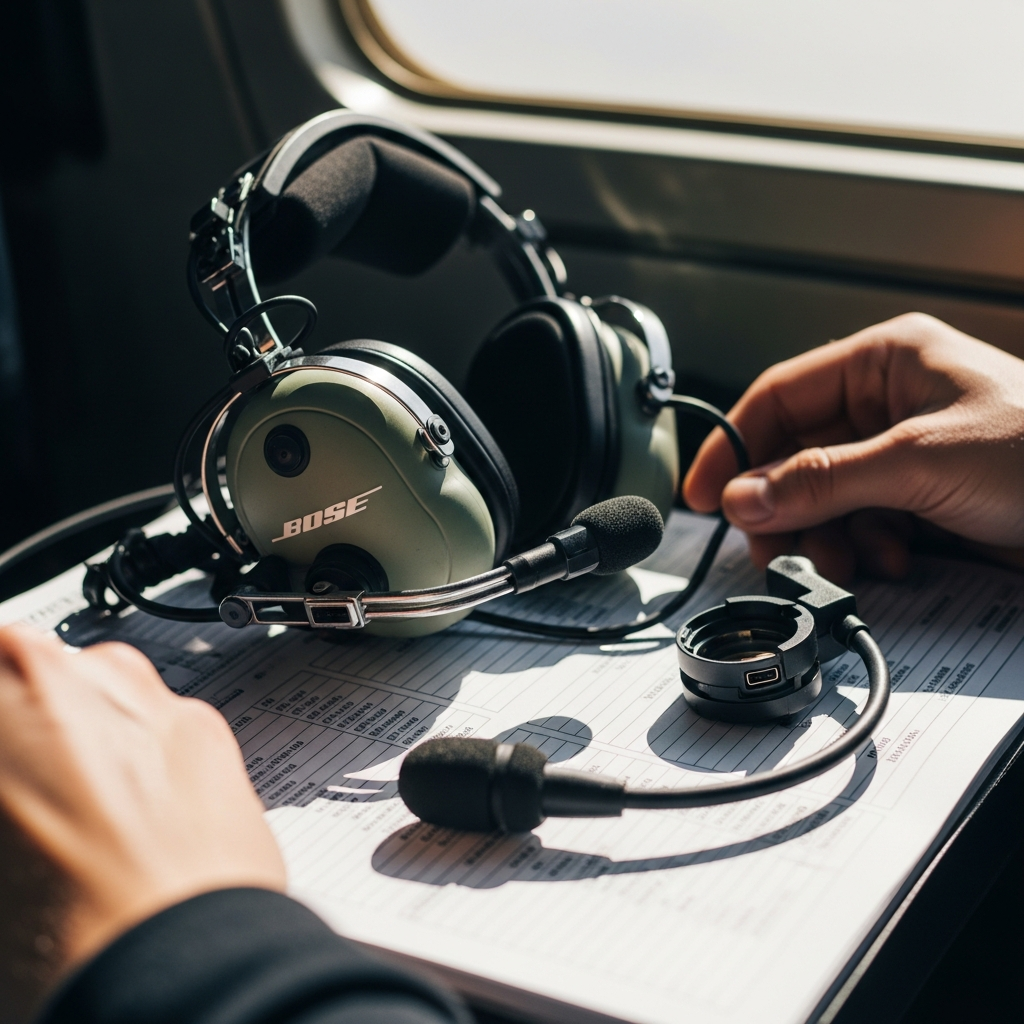
As someone with 340 hours in a Cessna 172 and two different Bose A20 headsets across five years, I’ve dealt with this exact problem twice. The mic failing mid-flight ranks among the most frustrating avionics gremlins out there — you hear ATC crystal clear, but nobody hears you transmitting. Probably should have opened with this section, honestly, because understanding what breaks will save you from chasing ghosts in the cockpit.
The mic-not-transmitting failure has gotten complicated with all the different theories flying around. But what is this issue, really? In essence, it’s a signal path breaking somewhere between your headset and the radio. But it’s much more than that. Four common culprits exist, and they’re not manufacturer defects so much as wear-and-tear that affects headsets across every pilot forum I’ve lurked in.
Loose or Corroded 5-Pin PTT Cable Connection — The cable connecting your Bose headset to the aircraft intercom terminates in a 5-pin Lemo connector. This connector sits exposed in the cockpit, subject to heat, humidity, and vibration. When the connection loosens even slightly, transmit signal fails completely while audio reception continues — that’s because receive uses a different pin entirely. The corrosion I saw on my second headset’s connector looked like green copper oxidation around pins 2 and 4. That’s your transmit pathway, dead.
Corroded or Damaged Headset Jack — The female jack on the A20 itself can develop corrosion or pin damage if moisture gets inside. Water ingress happens more often than you’d think, especially if you’ve flown through rain, sat in a humid tie-down for a week, or left the headset in an open case. The jack has five gold-plated contacts that transmit the PTT signal. One damaged contact and you’re silenced completely.
Intercom Unit Failure — Your aircraft’s intercom processes the PTT signal and routes it to the radio transmitter. If the intercom fails on the transmit side, your mic signal never leaves the unit. You’ll hear everyone else broadcasting. They won’t hear you. This accounts for roughly 25–30% of the dead-mic calls I’ve seen in GA forums.
Water Intrusion in the Connector or Cable — Condensation inside the 5-pin connector or along the cable jacket causes intermittent or complete transmit failure. I learned this the hard way when my second headset worked perfectly on the ground, then died 20 minutes into flight as altitude changed and cabin humidity shifted with it.
Quick Pre-Flight Mic Check You Should Already Be Doing
Before you ever leave the ground, run this sequence. Four minutes, start to finish.
Step one: Put on your headset and select the intercom to internal mode. Press the PTT button and speak. You should hear your own voice in the headset with a slight natural delay. If you don’t hear yourself at all, the headset jack or cable is already suspect. If you hear yourself but distorted or weak — well, that’s water, probably.
Step two: Switch to the radio and press PTT. Count three seconds. Release and listen for someone — a colleague on the ground, CTAF traffic, ATC, whoever’s available. Ask them if your transmission was clear or if it sounded weak, raspy, or cut out entirely. “Clear” means both PTT and mic are working. “Weak” or “distorted” points to the mic sensitivity degrading, possibly from corrosion. “Nothing” means no transmit signal got through at all.
Step three: Have a cabin mate or ground crew listen on a headset or handheld radio while you transmit at cruise. This isolates whether the problem is altitude-related — water intrusion expanding and contracting — or something else. A mic that works perfectly on the ground but fails at altitude usually means moisture sitting in that connector.
Dead mic versus weak transmission matter because they point to different fixes. Dead mic — complete silence on the radio — suggests a loose cable, failed intercom, or open PTT circuit somewhere. Weak transmission where others say they barely hear you but still copy points to a corroded jack or failing microphone capsule inside the A20 itself.
Step-by-Step Diagnostic in the Cockpit
Once you’ve confirmed the mic is genuinely not transmitting, run these four tests on the ground. Two minutes each, roughly. Keep a logbook entry of which test produced what result — that data saves an avionics tech an hour of bench time.
Diagnostic One — Swap Headsets
If your aircraft has a second headset or you can borrow one from another pilot, plug it into your intercom jack while you’re still on the ground. Press PTT and transmit on the radio. Ask for confirmation that you’re transmitting. If the borrowed headset transmits fine, your Bose A20 cable or jack failed. If the borrowed headset also doesn’t transmit, your aircraft’s intercom or radio wiring is the problem. Write down which headset worked and which didn’t.
Diagnostic Two — Inspect the 5-Pin Connector
Disconnect your headset cable from the intercom panel. Look at the male 5-pin connector on the end of your cable under good light or a flashlight. The five pins should be shiny gold or silver. If you see green oxidation, black spots, white corrosion, or pins that look bent or recessed into the connector body, that’s your transmit failure right there. You can sometimes clean light corrosion with isopropyl alcohol — 91% or higher — and a cotton swab, but deep corrosion usually means cable replacement.
Diagnostic Three — Listen for PTT Actuation Click
The PTT button on your Bose has a mechanical switch inside that clicks when you press it. Disconnect the cable, then press PTT while holding the headset near your ear. You should hear a small audible click. No click means the button mechanism failed and your PTT signal never left the headset. This is rare but happens after hard impacts or high-cycle use — my second A20 developed this after 800+ flight hours, actually.
Diagnostic Four — Swap the Intercom Unit
If your aircraft carries a spare intercom or another aircraft nearby has the same model, you can swap units on the ground. Disconnect your current intercom from power and antenna. Install the spare. Reconnect everything, then run the radio check again. If your Bose A20 transmits fine through the spare intercom, your original unit failed on the transmit circuit. Document the aircraft tail numbers and intercom model numbers for the tech.
Repair and Replacement Parts You Can Order Today
Once you’ve isolated where the failure lives, you have ordering options that don’t require a shop visit.
Bose A20 Replacement Cable — OEM
Bose part number 50288-QL7. This is the factory cable assembly with the 5-pin Lemo connector. Price runs $185–220 depending on vendor. Lead time is typically 5–7 days from stock. This is your best choice if the connector shows corrosion or if swapping headsets didn’t isolate the problem to the aircraft side. You can install it yourself in the cockpit — two connectors, five seconds max.
Tanis Audio Replacement Cable — Aftermarket
Tanis Audio makes a compatible A20 cable, part TAA-20-CABLE, at $165. Same functionality as OEM, slightly cheaper, but 10-day lead time. I’ve used Tanis cables in three different headsets with zero issues, and the company stands behind them with a two-year warranty. This is where I’d start if budget matters.
Headset Jack Replacement
If your visual inspection of the 5-pin connector looked clean but you suspect the female jack on the A20 itself corroded, replacement jacks exist but require either factory service or a skilled avionics tech. Bose doesn’t sell the jack separately. You’re looking at a $400–600 factory refurbish or a full new headset instead. This is the threshold where I’d stop self-repair and call a tech.
Intercom Unit Replacement
If all three checks pointed to the intercom unit, you’re looking at a factory-recertified unit or new purchase. A mid-range intercom — Garmin GMA340, Bose A25D — runs $3,500–5,500 new and requires avionics installation and certification. Used certified units sometimes appear on trade sites for $2,000–3,500 but need to be bench-tested before installation. This is shop territory.
When to Stop Troubleshooting and Call a Tech
If you’ve run all four diagnostics and the results are ambiguous — or every test passed but the mic still doesn’t transmit — stop. You’ve narrowed the problem enough that an avionics shop can diagnose with certainty using bench equipment.
Specifically, stop if the borrowed headset transmits fine. Your cable is bad — order it. Stop if the borrowed headset also fails. Intercom or wiring issue — shop only. Stop if you see obvious corrosion on the connector but after cleaning it, the mic still doesn’t transmit. Cable needs replacement anyway, order it. Stop if the PTT button doesn’t click when you press it. Headset failure — shop bench test or replacement.
A shop diagnosis for a mic-not-transmitting issue typically runs $150–300 for bench time and parts inspection. That’s worth it if the diagnostics above weren’t conclusive. Once they’ve identified the exact failure point, you’ll either order a cable, replace the jack, or schedule intercom work. Having this troubleshooting data in your logbook cuts their time in half and cuts your bill accordingly.
The Bose A20 is a robust headset — I’ve owned two and heard from dozens of pilots who’ve owned three or more without major issues. The mic failure isn’t a design flaw. It’s normal wear on a connector that lives in a vibration and humidity-intensive environment. Run these diagnostics, order the part if it’s a cable, and you’ll be transmitting again before your next flight.
“`