“`html
Why Headset Choice Matters in a Cessna 172
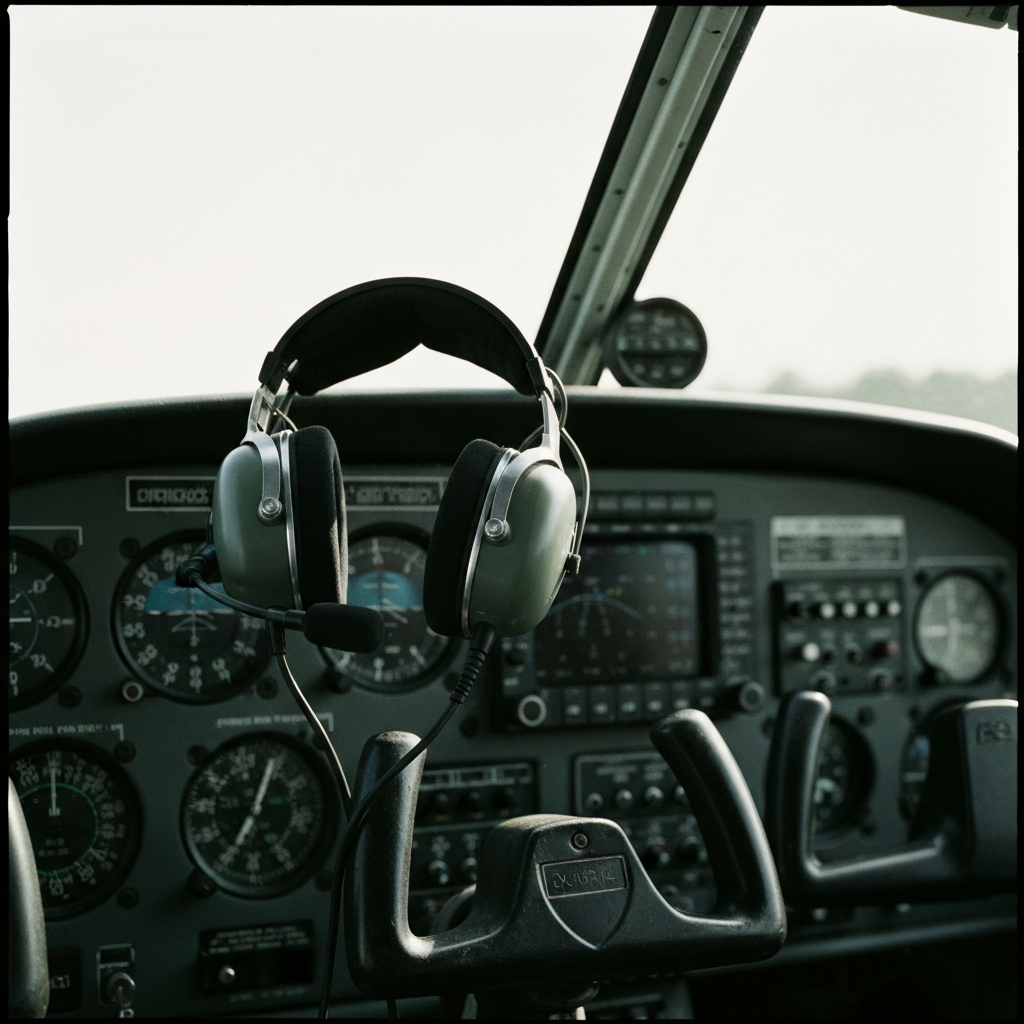
Headsets in a Cessna 172 have gotten complicated with all the options flying around these days. I’ve logged over 200 hours in these high-wings, and honestly—the single biggest regret from my early training days was ignoring headset quality. That continuous drone, especially during those 3–4 hour cross-country flights, does something to your ears and brain that you don’t fully appreciate until you’re 90 minutes in and your temples are throbbing.
But what makes a good aviation headset for a 172 pilot? In essence, it’s about managing comfort during sustained flight. But it’s much more than that. You’re juggling instructor feedback, student calls, ATC frequency changes, and the structural noise of a Continental O-300 engine all at once. A 172 generates roughly 75–85 decibels of steady-state noise at cruise—prolonged exposure without proper attenuation leads to fatigue, missed radio calls, and communication breakdowns between instructor and student.
Here’s what most generic reviews miss: your 172 might have a 60-year-old COM1 radio with a vacuum-tube amp, or it might have a brand-new G1000 glass panel. Headset compatibility isn’t universal. Intercom integration matters differently depending on whether you’re flying solo or training the next generation. And then there’s physical fit—actual door clearance for a mic boom, headband pressure on someone with a smaller head, cable routing through cramped overhead spaces. Those aren’t marketing specs you’ll find in any product description.
I learned this the hard way after buying a premium headset that scraped against the 172’s cabin door on each bank turn. Don’t make my mistake.
Top 4 Headsets for Cessna 172 Pilots Ranked
David Clark H10-13S — The Workhorse
Ask 100 Cessna 172 instructors which headset they own, and 60 will say David Clark without hesitation. The H10-13S has been the standard for light aircraft training since the 1990s. There’s a reason: it simply works in a 172.
The specs matter here—passive noise reduction, 20 dB effective attenuation, weighs 5.3 ounces. The headband pressure is firm, some say aggressive, but it stays locked in place over 4-hour legs without slipping. You’re looking at $270–$320 depending on plug type (6-pin, dual GA, or XLR connectors). Intercom compatibility? Bulletproof. Ancient vacuum-tube radios and modern glass panels—it handles both without any intermediary box. For instructor-student pairs, two H10-13S units plus a single intercom adapter (usually built into the aircraft) is your baseline setup.
The knock against it—no active noise reduction. Your ears work the whole flight. The headband pressure also becomes a liability if you wear glasses or have a narrower head. I’ve seen students abandon these midway through a check ride due to discomfort.
Best for: Budget-conscious 172 owners, instructors flying 5+ flights per week, pilots with older radio stacks.
Lightspeed Zulu 3 — The Comfort Play
Active noise reduction changes everything on a 4-hour leg—that’s the honest truth. The Lightspeed Zulu 3 delivers 25–28 dB of ANR-assisted attenuation, weighs 5.9 ounces, and the headband pressure is noticeably lighter than David Clark. Two AAA batteries power the ANR for roughly 40 hours before you need a swap.
Price sits around $520–$580 depending on connector type. Intercom setup is identical to David Clark—clean integration with stock 172 panels, no extra boxes required. Bluetooth is built in, though in a basic 172 panel, it adds little value—you’re not pairing your iPad for ATC communication.
The comfort improvement is real. After three hours, your sinuses don’t feel clamped in a vice. The ANR battery also fails gracefully, continuing as a passive unit if batteries die mid-flight—a safety feature I personally tested on a flight back from Oshkosh when I forgot spare batteries.
The tradeoff: ANR battery management. You need spare AAs available, and some 172 owners report that ANR circuitry picks up interference on certain older intercom systems. Worth calling Lightspeed support with your exact radio stack—15 minutes of time saves frustration later.
Best for: Frequent cross-country pilots, owners upgrading from passive headsets, anyone with glasses or sensitive headband pressure points.
Bose A20 — The Premium Standard
At $1,000–$1,200, the Bose A20 is the luxury option. Not because noise reduction is dramatically better than Zulu 3—it isn’t. The difference is the user experience. Bluetooth audio codec is professional-grade. Battery life extends to 45+ hours. Weight matches Zulu 3, but the ear cup materials—premium leather and memory foam—stay comfortable for 5+ hour legs without the clamping sensation that even Zulu 3 develops after extended use.
Intercom compatibility is standard across all modern 172 avionics. The real question: is $500 more worth it for a 172? For professional flight schools running 60+ hours monthly, yes. For recreational owners flying 20–30 hours annually, the value argument weakens considerably. I’ve flown Bose A20s in Cirrus aircraft where the noise profile is different, and the premium seemed justified. In a 172, it feels like gold-plating.
One mechanical note—the Bose connector system (two-pin) is proprietary. If you need to swap headsets between aircraft with different intercom configurations, you’ll need adapters or separate cables.
Best for: Flight schools, professional instructors, owners flying transatlantic or cross-country routes regularly, pilots who’ve used Bose in other aircraft and want consistency.
Faro G2 — The Budget ANR
At $400–$450, the Faro G2 is your entry point to ANR without jumping to Zulu 3 or Bose pricing. Active noise reduction is reliable here, attenuation sits around 22–24 dB, and battery life reaches 35 hours. Headband pressure is moderate—comfortable for 2–3 hour flights, slightly tight after 4 hours.
The caveat: Faro support and parts availability is narrower than David Clark or Lightspeed. Need a replacement ear cup or headband pad? You’re ordering direct from Faro, not finding it at your local FBO. Intercom compatibility requires checking your specific 172 panel configuration. Some users report intermittent audio on vacuum-tube-era intercoms, though modern glass panels work without issue.
Best for: Budget-conscious pilots seeking ANR for the first time, owners flying mostly 2–3 hour missions, those willing to tolerate longer support lead times.
Intercom and Radio Compatibility in Your 172
Probably should have opened with this section, honestly—it’s the question that kills deals at the FBO.
Your 172’s radio stack determines headset behavior. Flying a 1970s-era 172 with an original Narco Avionics COM radio and a vacuum-tube intercom? Most modern headsets will work, but some ANR units report background hum or interference. David Clark H10-13S sidesteps this entirely—fully passive, no circuitry, no potential for coupling with old tube amps.
Switching between COM1 and COM2 via headset controls (standard on Zulu 3 and A20) works on glass-panel 172s with integrated avionics. On steam-gauge panels with separate COM radios, you’re using the radio’s physical switches, not the headset. Performance stays identical—just workflow changes.
The instructor-student scenario: two headsets feeding a single intercom box. Both Zulu 3 and A20 work cleanly here. Intercom boxes (like the standard Univox or King systems found in rental 172s) expect low-impedance microphone inputs and handle ANR mics without degradation. What you’re not buying is a separate intercom amplifier or adapter—the 172’s panel already includes this hardware.
One practical detail: if you’re upgrading an older 172 panel to a G1000 NXi retrofit, confirm with the avionics shop that your headset connectors match the new intercom loom. A $300 cable harness swap beats discovering incompatibility mid-flight.
Noise Attenuation vs. Comfort on Long Flights
Passive noise reduction relies on ear cup seal and material density. David Clark H10-13S achieves 20 dB NRR through tight foam seals and rigid cup construction—effective for steady-state engine noise. But your ears are still processing the drone continuously. After 3+ hours, fatigue accumulates because your auditory system isn’t relaxing.
Active noise reduction samples incoming noise and inverts its sound wave, canceling it before reaching your ear. Less effective on steady, continuous tones (where passive NRR excels), highly effective on periodic or variable noise. A 172’s engine noise is mostly steady, so ANR gains you maybe 3–5 dB additional attenuation and a psychological relief that reduces overall fatigue. That’s the real win.
Weight differences—David Clark at 5.3 oz, Zulu 3 and A20 at 5.9 oz—are minimal. Combined with headband pressure design, they matter considerably. David Clark uses a single, firm band; Zulu 3 and A20 distribute pressure across dual-arm designs. Flying 4-hour legs twice weekly? Dual-arm design prevents the temporal headache that tight single-band headsets create.
Sweat and moisture accumulation is a real, uncomfortable aspect nobody discusses. Leather ear cups (Bose A20) breathe poorly compared to cloth or gel pads (Zulu 3, David Clark). I’m apparently someone who sweats in the cockpit and leather never worked for me while cloth keeps me comfortable. In humid climates or summer flying, Zulu 3 remains comfortable past hour 3. Switching between leather and cloth pads mid-season showed me the difference immediately.
Budget Tiers and Best Value for 172 Owners
Under $300 — Passive Only
David Clark H10-13S lives here. You’re getting proven, reliable, zero-failure intercom integration and compatibility with literally any 172 radio stack built since 1965. The tradeoff: fatigue on long flights and headband pressure that some pilots never adapt to. Value is exceptional if you’re flying 15–25 hours annually with missions under 3 hours. Flight schools and instructors? Essential equipment. You’ll replace these every 2–3 years due to wear, and sunk cost remains manageable.
$300–$700 — Entry ANR and Premium Passive
Lightspeed Zulu 3 ($520–$580) and Faro G2 ($400–$450) occupy this band. You’re gaining ANR fatigue reduction, moderate to excellent comfort improvements, and maintaining straightforward 172 intercom compatibility. The value inflection point is real—an extra $250 over David Clark nets you 30–40% reduction in listening fatigue on 3+ hour flights. For owners flying 40+ hours annually, this tier justifies itself in year one. ANR battery management requires minimal overhead.
$700+ — Premium and Pro-Grade
Bose A20 lives here. Justify this tier if you’re flying cross-country routes (6+ hour missions), operating a flight school, or splitting time across multiple aircraft where consistency matters. One A20 in your 172, a second in your Cirrus, and headset switching becomes intuitive. The price premium doesn’t translate to proportional noise reduction gains—it’s diminishing returns on comfort and ecosystem integration.
For a recreational 172 owner flying 30 hours per year, a $1,200 headset is overkill. A used Zulu 3 at $350 and extra AAs is smarter capital allocation.
Make your decision based on mission profile, not marketing. A 172 trainer used 5 days per week lives in the David Clark world. A casual cross-country cruiser belongs in Zulu 3 territory. Neither decision is wrong—they’re right for different flying.
“`