As an Amazon Associate, Zulu Parts earns from qualifying purchases. Prices and availability are accurate as of the time of purchase.
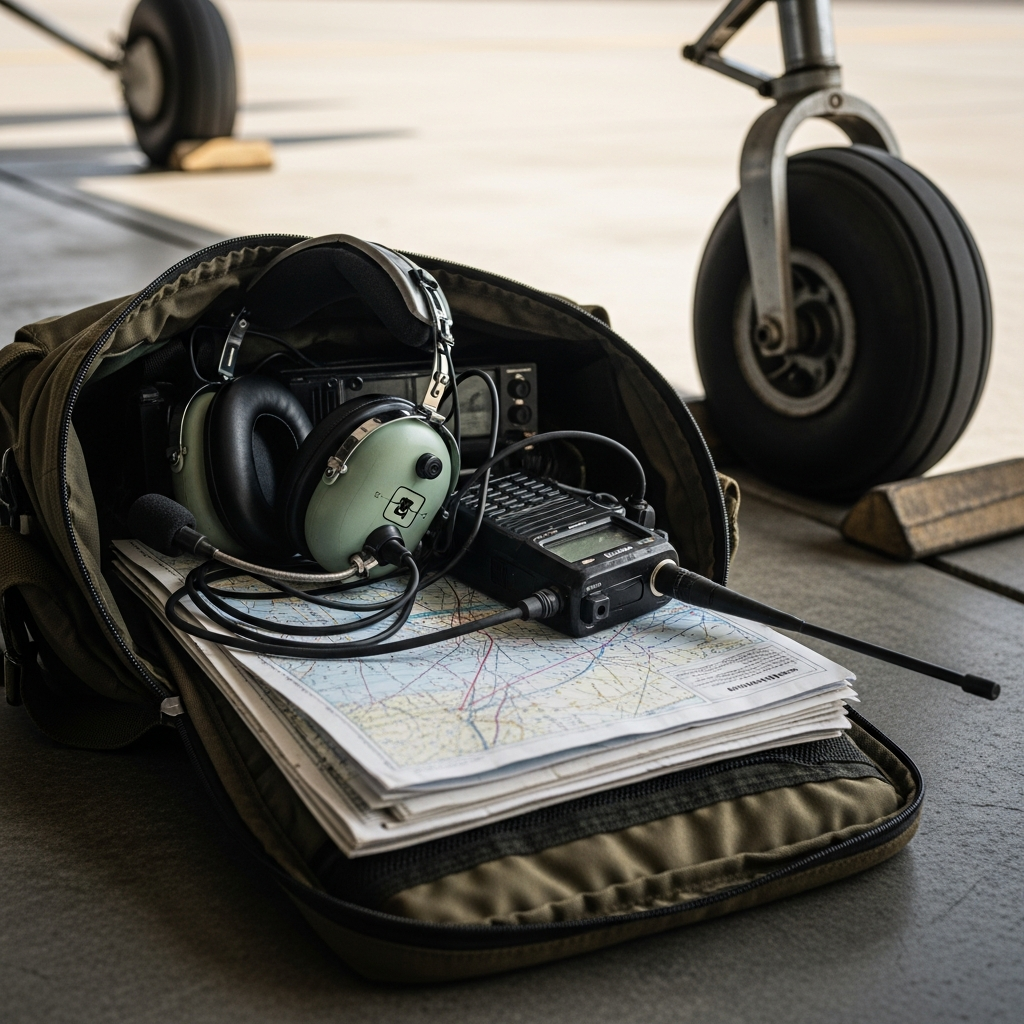
A well-chosen flight bag is one of those pieces of gear that quietly makes every cross-country flight better. It keeps your charts, headset, iPad, and emergency gear organized and accessible during preflight, en route, and on the ramp — and on a long trip with multiple legs, that organization pays real dividends in reducing cockpit clutter and pilot fatigue. Whether you fly a Cessna 172, a Piper Arrow, or a Beechcraft Bonanza, the bag you carry is with you every single flight, so getting the right one matters.
Cross-country flying puts specific demands on a flight bag that local pattern work doesn’t. You need room for an EFB tablet, a quality headset, approach plates or a kneeboard, snacks, and overnight gear — all in a package that fits under a Cessna’s cramped panel or in a Piper’s baggage compartment without becoming a cockpit hazard. The picks below cover a range of sizes, organizational styles, and price points to match different flying missions and aircraft types.
Our top picks at a glance:
| Product | Best For | Price |
|---|---|---|
| Sporty’s Crosswind Flight Bag | Affordable everyday flight bag option | Check Price → |
| Flight Outfitters Lift Flight Bag | Lightweight organization with comfortable carry | Check Price → |
| Brightline Bags B7 CORE Flight Bag | Premium durable construction and design | Check Price → |
| MyGoFlight Flight Bag PLC | Customizable organization for various pilots | Check Price → |
| Jeppesen Flight Bag (Large Tri-Fold) | Large capacity tri-fold storage solution | Check Price → |
Sporty’s Crosswind Flight Bag
Sporty’s has been outfitting pilots for decades, and the Crosswind reflects that institutional knowledge. It’s a medium-sized, soft-sided bag with well-thought-out compartmentalization — dedicated slots for charts, a headset compartment, and exterior pockets that keep frequently grabbed items like sunglasses and a handheld radio within easy reach. The materials are durable without being excessively heavy, which matters when you’re already carrying a headset case and an overnight bag across a busy FBO ramp.
The Crosswind suits the private pilot or instrument student who wants a classic, no-fuss layout at a reasonable price point. It won’t win awards for modular customization, but its straightforward design means everything has a place and you’ll find it quickly on a bumpy leg in IMC. A solid first “real” flight bag for pilots moving beyond a backpack.
Check Sporty’s Crosswind flight bag pilot price on Amazon →
Flight Outfitters Lift Flight Bag
The Flight Outfitters Lift has earned a loyal following among general aviation pilots who want a thoughtfully modern bag without paying professional-grade prices. Its standout feature is the dedicated padded tablet sleeve that securely holds an iPad mini through a full-size iPad, making it a natural fit for ForeFlight-equipped pilots. The main compartment is deep enough for a David Clark or Bose A20 headset, and the exterior layout keeps approach plates and a kneeboard accessible without digging.
The Lift is particularly well-suited to the IFR cross-country pilot who has largely gone paperless but still wants structure and protection for electronic gear. Build quality is above average for its price range, with reinforced stress points and quality zippers. If you’re flying 200–400 nm legs in a Piper Archer or Cessna 182 and your bag needs to double as carry-on luggage, the Lift handles that duty well without looking out of place in a terminal.
Check Flight Outfitters Lift flight bag price on Amazon →
Brightline Bags B7 CORE Flight Bag
The Brightline B7 CORE takes a fundamentally different approach to flight bag design — it’s a modular system where you purchase a base bag and add or remove attachment modules based on the mission. The B7 configuration gives you a substantial main compartment plus the ability to clip on additional pouches for a headset, documents, survival gear, or whatever a specific trip demands. This isn’t a gimmick; for pilots who fly different aircraft types or mix cross-country flying with light backcountry work, the modularity is genuinely practical.
The trade-off is that getting the most out of a Brightline system means investing in multiple modules over time, and the total cost can climb accordingly. The bags are made in the USA from high-quality materials and are built to last many years of hard use. The B7 is best suited to the serious cross-country pilot or CFI who wants one bag architecture that adapts to varied missions rather than owning several specialized bags.
Check Brightline Bags B7 CORE flight bag modular price on Amazon →
MyGoFlight Flight Bag PLC
MyGoFlight built its reputation on iPad and tablet mounting solutions for the cockpit, and the Flight Bag PLC reflects that EFB-first design philosophy. The PLC (Pilot Leg Companion) is a slim, lightweight bag optimized for the modern pilot who runs a mostly digital cockpit. It features a secure tablet pocket sized for iPad generations, a kneeboard-style leg strap system, and enough organization for the essentials without the bulk of a traditional flight bag. It’s compact enough to sit on your lap or tuck beside the seat in a Cessna 172.
Where the PLC stands out is convenience during taxi, run-up, and the cockpit-intensive phases of a cross-country flight — everything you need is within arm’s reach and secured. Pilots who prefer a minimalist loadout and have already solved headset storage separately will find this bag exceptionally well-suited to their workflow. It’s less appropriate if you want a single bag to carry a bulky ANR headset, overnight clothes, and all your chart materials together.
Check MyGoFlight Flight Bag PLC pilot price on Amazon →
Jeppesen Flight Bag (Large Tri-Fold)
No cross-country flight bag roundup is complete without acknowledging Jeppesen’s large tri-fold bag, a longtime standard in professional and serious amateur aviation circles. Designed originally with the chart-heavy IFR pilot in mind, it opens flat to reveal an organized layout that accommodates Jeppesen binders, approach plates, logbooks, and full-size charts alongside headset storage and electronics pockets. The construction is robust and the design is time-tested over decades of real-world use.
This is the bag for the pilot who flies frequently in the IFR system, keeps physical Jeppesen plates as a backup, and values the ability to spread out their materials on an FBO counter during a weather stop. It’s larger and heavier than the other picks here, so cockpit space is a consideration in smaller singles. But for a Beechcraft Baron or Bonanza pilot who wants a professional-grade, durable bag with maximum carrying capacity, it remains one of the best choices available.
Check Jeppesen large tri-fold pilot flight bag price on Amazon →
How to Choose
The right flight bag depends on how you fly, what aircraft you fly, and how much gear you realistically carry on a typical cross-country. Honest self-assessment here saves money — most pilots overestimate how much bag they need, and a smaller, well-organized bag usually outperforms a large one that becomes a grab pile.
- Aircraft size and cockpit space: Small singles like a Cessna 172 have limited floor and seat space; slim, upright bags or kneeboard-style options work better than large soft cases.
- Paper vs. digital workflow: If you fly with ForeFlight or Garmin Pilot on a tablet exclusively, prioritize a bag with a good padded tablet sleeve over one built around chart binder storage.
- Headset type and case: Large ANR headsets like the Bose A20 or Lightspeed Zulu take up significant volume. Confirm a bag’s headset compartment dimensions before buying if this is a priority.
- Trip length: Day trips and local cross-countries need far less bag than week-long fly-outs. If the bag also needs to serve as carry-on luggage, choose a profile that fits airline overhead bin guidelines.
- Durability and construction: Look for reinforced zippers, quality stitching at stress points, and water-resistant materials — your bag will spend time on wet ramps and in dusty hangars.
FAQ
What size flight bag do I need for a cross-country trip?
For most single-engine cross-country flying, a medium-sized bag in the range of 20–30 liters is sufficient to carry a headset, tablet, kneeboard, and essential documents without overwhelming a small cockpit. Larger bags make more sense if you regularly carry physical chart binders or need overnight gear integrated into a single bag.
Can I use a regular backpack instead of a dedicated flight bag?
You can, and many student pilots do — but purpose-built flight bags organize aviation-specific gear (chart pockets, headset compartments, tablet sleeves) in ways that general backpacks don’t. On a long cross-country with multiple approaches, that organization reduces workload and helps you find critical items quickly. A dedicated bag is a worthwhile investment once you’re flying regularly.
Are modular flight bags like the Brightline system worth the extra cost?
If your flying missions vary significantly — mixing IFR cross-countries, backcountry strips, and instructing, for example — the ability to reconfigure a modular bag for each mission type provides real value over time. If you fly one type of mission consistently, a fixed-layout bag at a lower upfront cost will likely serve you just as well.